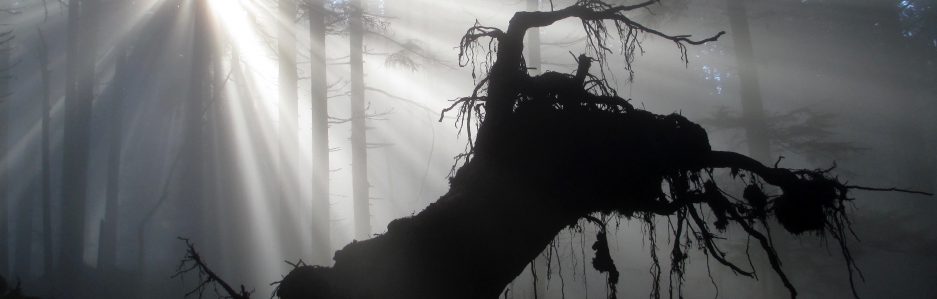
A little over a month ago, Hurricane Helene smashed through Western North Carolina, washing away lives, livelihoods, roads, and homes. People are still without water and power. Many have died. Some are still missing. The piles of debris are like a new, tragic set of mountains – giant heaps of gutted houses, smashed cars, and god-knows-what that washed downriver.
Soon after the storm, a friend sent me this diagram, titled The Emotional Life Cycle of a Disaster Explained:
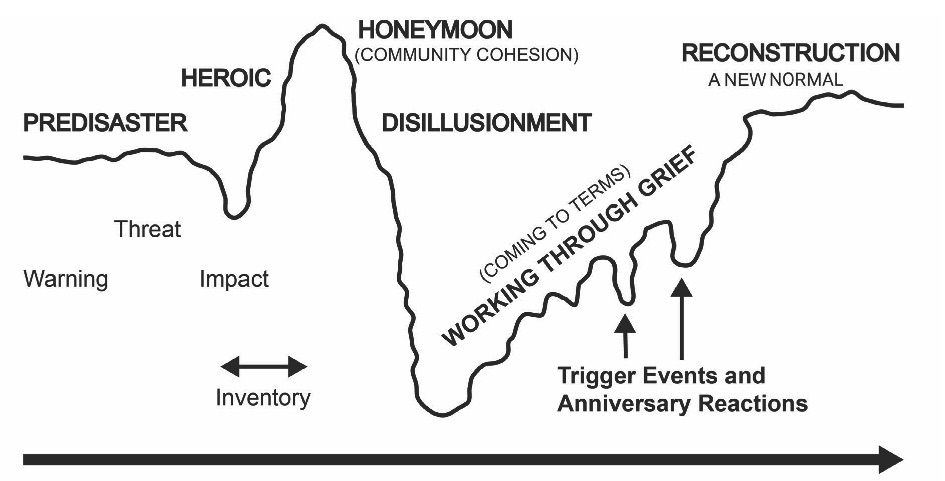
Given the level of destruction in WNC, the timeline between “Honeymoon” and “Reconstruction” will be a very long one, and some things can’t be reconstructed, like the thousands of downed trees. Yes, we’ll plant new ones, but it’ll be hundreds of years before they provide the lush, cooling canopies of the past.
Despite the reality of these dire circumstances, as soon as the storm blew through, the #strong label was everywhere. When did this phenomenon begin – maybe fifteen, twenty years ago? In the immediate aftermath of catastrophes, communities self-declare as, or are proclaimed to be, #strong.
I get the sentiment behind it: We will not be cowed by this. We are brave. We are resilient. We will persevere. And all of that is true. The WNC community has been incredible in its unity, compassion, generosity, and untiring aid over the past month.
But the instant, automatic application of #strong also sidesteps important parts of reaction and recovery. What about mourning and working through grief? What about granting ourselves the grace to collapse a little? What if, as I see scenes of destruction and hear stories of lost family members, friends, neighborhoods, and homes, I don’t feel like being #strong? What if my feelings are more along the lines of #gutted, #exhausted, or #curledinaballofsadness?
When I do feel hopeful, helpful, and encouraged – which is more and more often these days – I’m still balancing those feelings with profound grief and loss, like #strong + #heartache. And that’s okay. Recovery is complicated, and accepting the presence of pain is its own kind of strength.
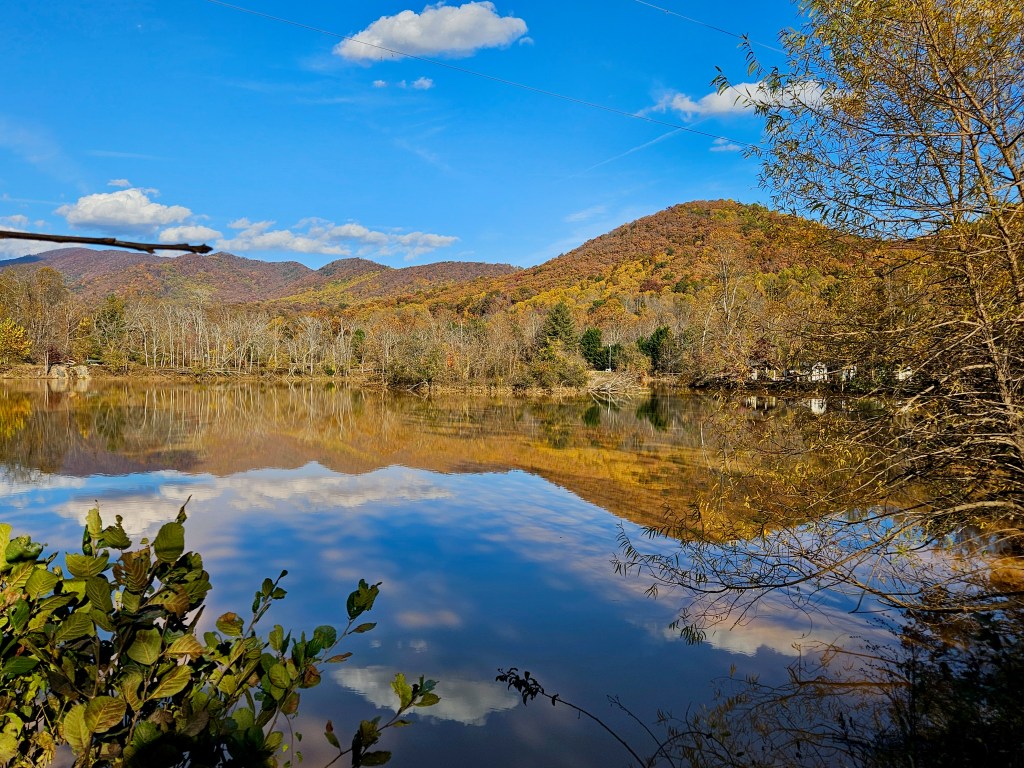
I took this photo last week. It gives me hope. The water, though full of silt, still offers a reflection. Trees are down in those mountains, but many more stand than have fallen. This land grieves, buries its dead, and spawns new life. It is broken, and it is healing, and it is strong.
[For folks wanting to donate to WNC’s recovery, Beloved Asheville, Samaritan’s Purse, and Hearts with Hands are doing amazing, hands-on work throughout the region, and the River Arts District and LEAF Artist Relief Fund are collecting funds to support and rebuild the arts community.]
 Powered by Dragons