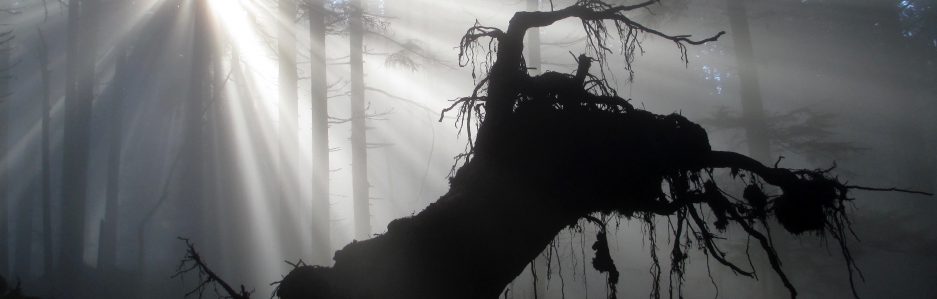
“They’re called the Stages of Grief, but don’t expect them to march along in a logical, predictable order. Their arrival may seem more like a swirling tornado.”
Mirroring this state of emotional chaos, the presenter whirled his arms through the air while I doodled row upon row of tiny circles in my notebook. Though his style was dynamic, it’s hard for lecturers to capture my attention for long, especially when I’m seated in a frigid banquet room under anemic lighting with hundreds of other whispering, coughing, fidgeting attendees.
His arms continued to spiral while he pantomimed a wild ride through the stages of grief: a sudden crash into depression, swift slide over to bargaining, explosion of anger, dip of a toe in acceptance, then a graceless stumble back to denial. As he said, “Sometimes that’s all in an hour!” and the audience laughed, I wrote Stages of Grief = Emotional Tornado below a row of tiny circles.
The trainer’s whirling arms were brought to mind a few days after my father’s sudden death two weeks ago, when Mom described a dream she’d had the night before in which she and Dad watched a huge tornado bearing down on them. These days, I’m caught squarely in the center of my own grief tornado, and I don’t need anywhere near an hour to spiral erratically through the stages. In a span of five minutes, I’ll sob my head off, narrow my eyes at a photo of him and mutter, “Thanks for bailing on us,” sob again, convince myself that this is just part of the relentless nightmare that is 2020 and he’ll be back at any moment, sob some more, tell God that I will totally start believing in him/her/them if this situation can be undone (please and thank you, amen), sob sob sob, then decide that staying in bed forever is probably the best idea. Clearly, acceptance has not yet found its place in my tornado. The pain is still so raw that acceptance seems like a betrayal to his memory. I know (hope/trust) that this will change with time.
When I arrived at my parents’ house the morning after Dad’s death, I found his to-do list on the kitchen table, his pill case beside his bed, filled up for the week to come, his day-to-day toiletries in the bathroom, his clothes piled on the dryer, and a pair of his shoes by every door. His watch, placed on the table next to his usual spot on the couch, still tracked the seconds, minutes, and hours in which he no longer existed. Packages of fishing supplies he’d recently ordered arrived at the house alongside floral arrangements and sympathy cards.
Dad was yanked away so quickly that it’s hard to stop reeling from the shock. I hugged him and said goodbye just hours before he died. He was expected at my sister’s later that week to look after his grandsons for a few days. He and Mom had planned to take the Blue Ridge Parkway to visit my husband, sister, and me at our campsite that weekend. When we’d made the plan, he’d pulled out one of his trusty paper maps to plan the route and said, “It’s good to have something to look forward to.”
I’ve dreaded my father’s passing ever since his first major cardiac event in 1985, when I was ten years old. Despite the fervent protests of his loved ones, he was always cavalier about his death, replying to each, “Good night – see you in the morning!” with, “I certainly hope so,” and reminding us ad nauseam that he wouldn’t be around forever. But nothing could’ve prepared me for this abrupt loss. The finality. The permanent state of absence. As I told my mom the other day, “He just keeps being gone.” She said she’d been thinking the same thing – that he’d been away plenty of times before, but he’d always come back. And we took a step away from our separate tornados to hold each other and cry.
I know that my family, and everyone who loved Dad, will find a way to get through this. We’re huddling close and holding onto one another. In my journal, I’m writing a list of all the things he loved, and while it makes me break down now, someday it will make me smile. I’ve discovered two good grief strategies: the shower is a good place to cry, and the car is a good place to scream. And I’m not fighting the tornado. Like all forces of nature, even the most vicious, it will run its course, and in the wake of its destructive path, there will be opportunities for rebirth. While that future is unforeseeable today, I trust that it will come.

 Cuddle pile with young, healthy pups ~ those were the days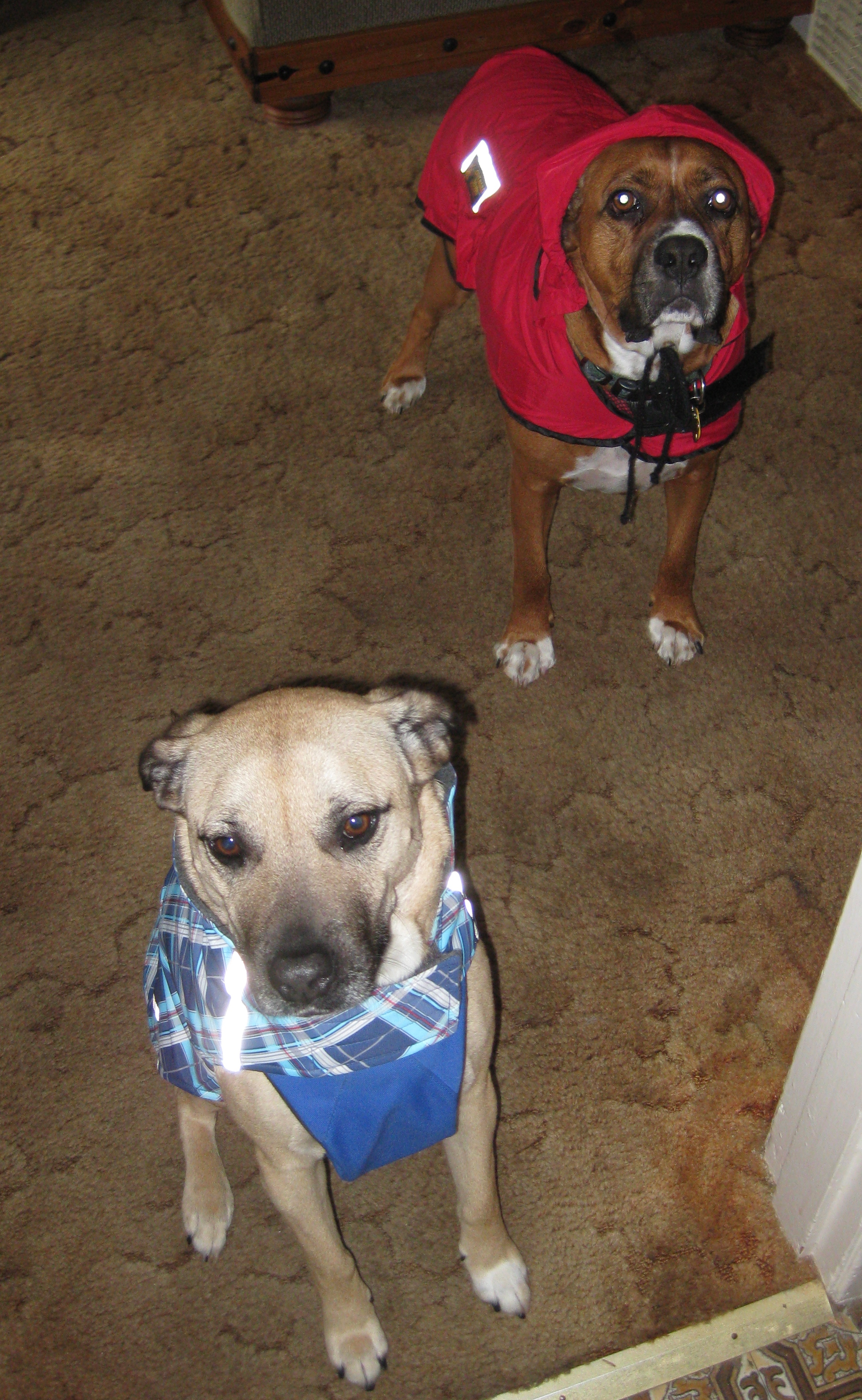
 Powered by Dragons