Shaken

When we picked Titus up from the Humane Society in July of 2020, he was 2 months old and weighed 16 pounds. The shelter staff guessed he and his littermates were boxer/hound mixes. We thought that seemed reasonable. In retrospect, we should’ve taken a closer look at those paws.
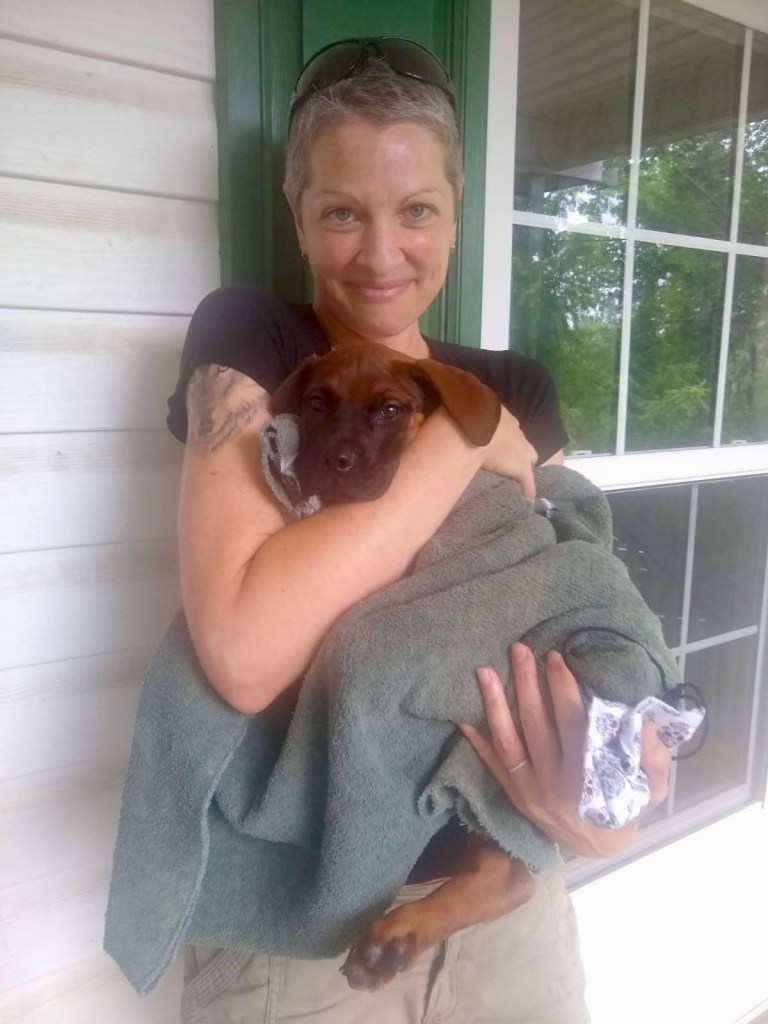
When he went from the little guy pictured above to this:
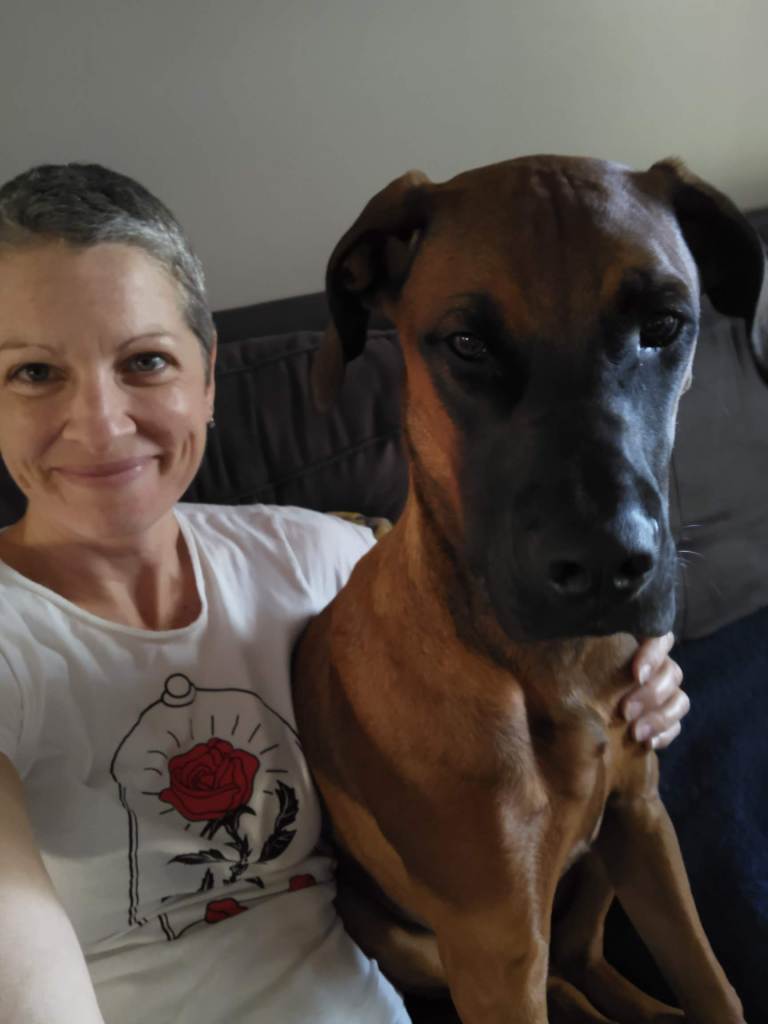
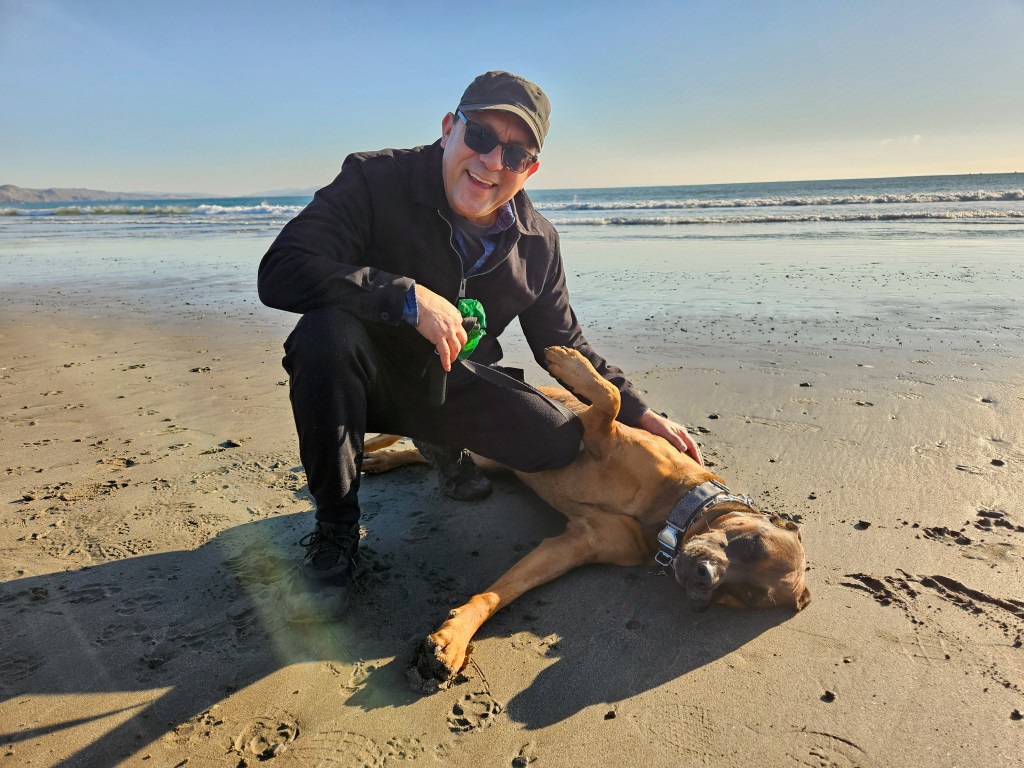
…in a matter of months, quickly outgrowing his status as “Tiny Titus,” we decided to get his DNA tested. Results: half-mastiff, half-Doberman. Very different animal, so to speak, than a boxer/hound.

We adopted the two dogs we’d had prior to Titus when they were adults. Titus was our first opportunity to have a dog from puppyhood and mold his character precisely the way we wanted. Or so we thought.

We were hoping for a sweet, loving, snuggly dog we could take on paddleboarding and hiking adventures. Our sweet/loving/snuggly hopes were certainly fulfilled. We just weren’t expecting the snuggler to cap out at almost 130 pounds.
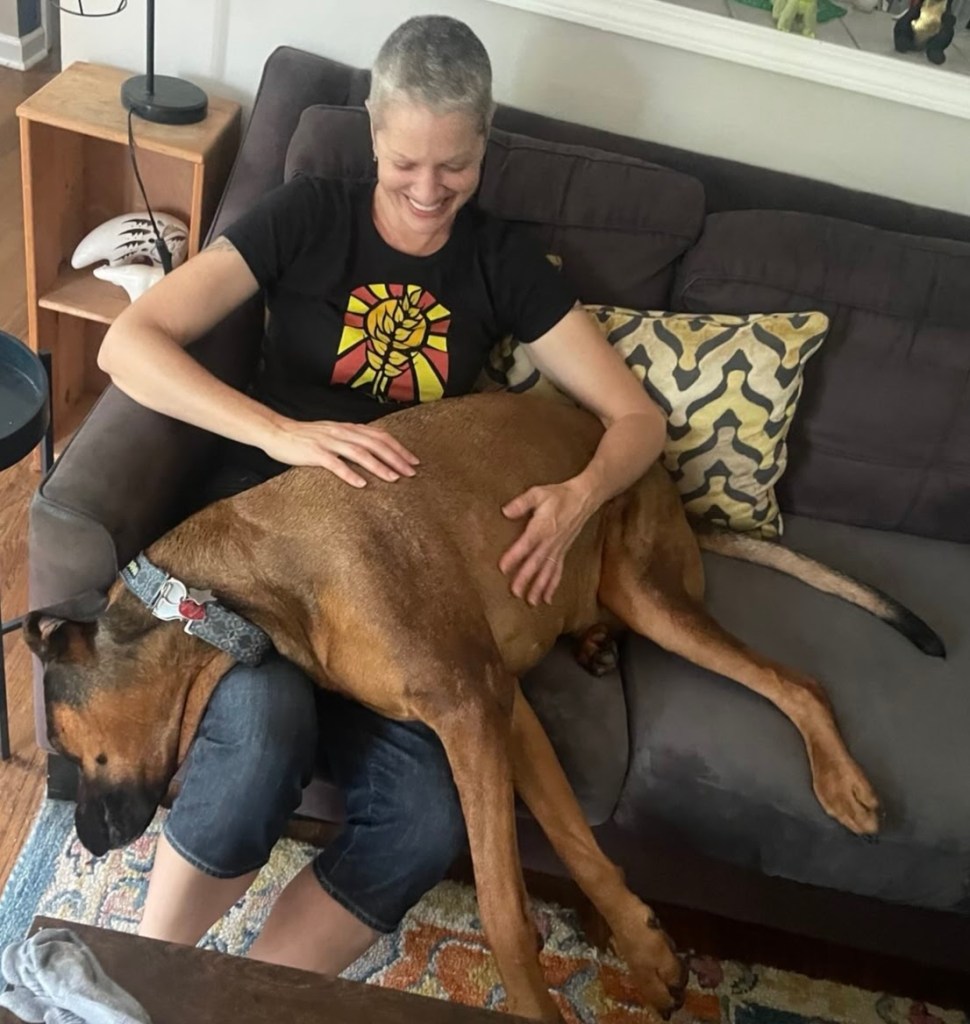
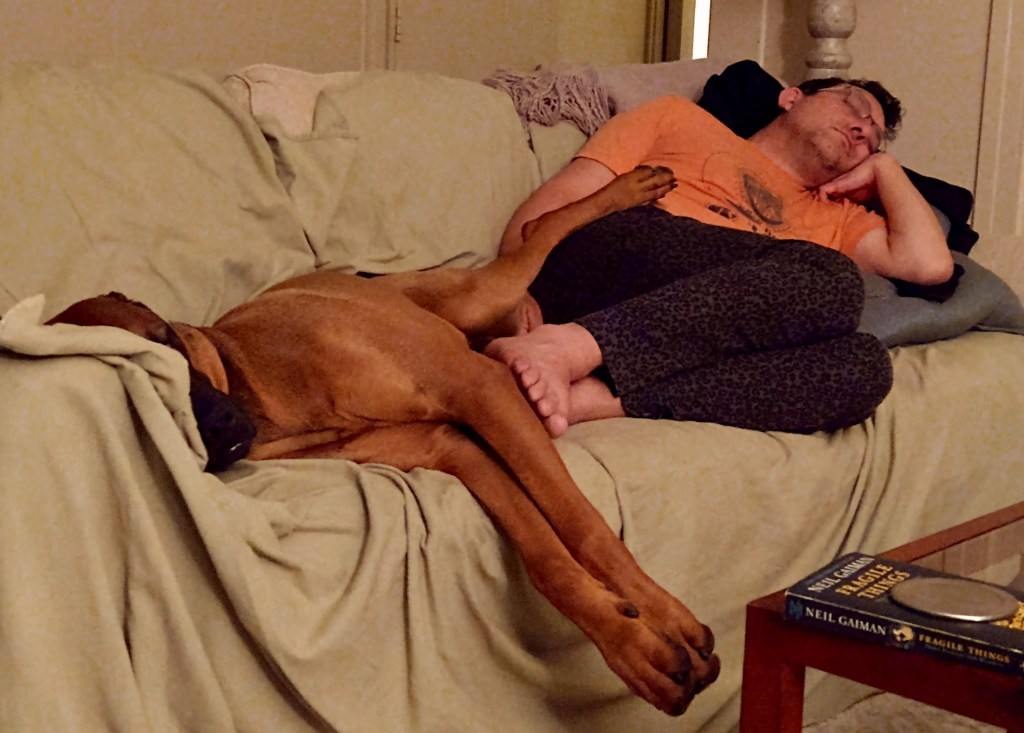
Titus’ preferred position: crushing his mama

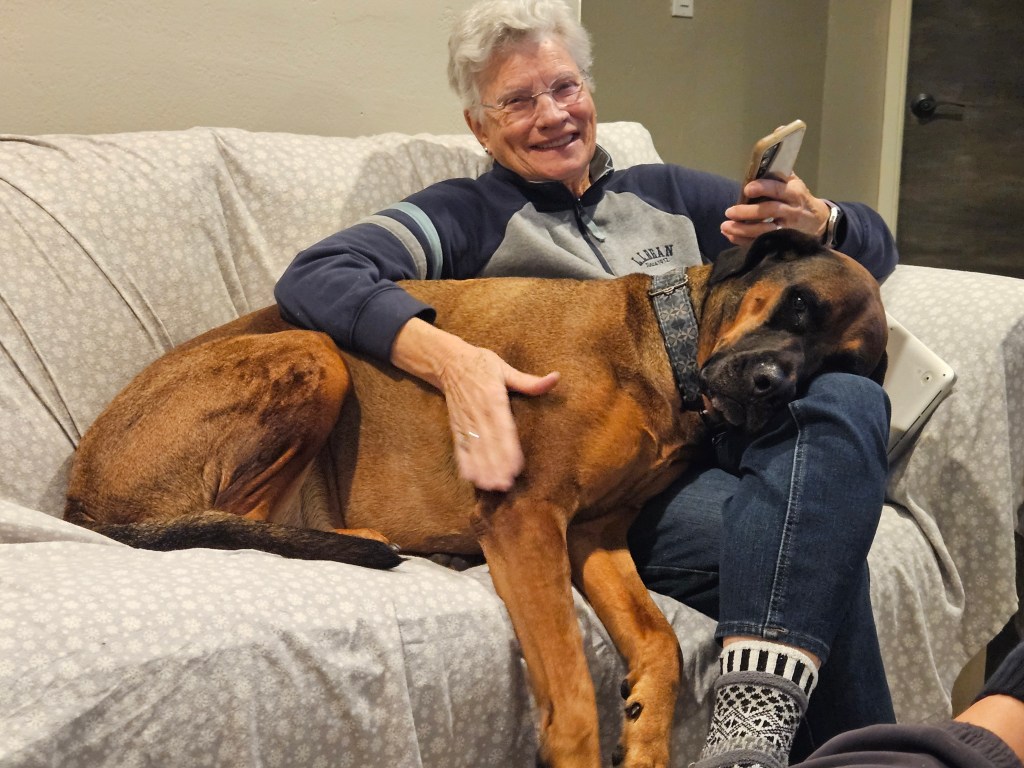
He also likes to crush his grammy

Our hiking dream, however, was not to be realized. Titus does love to be outside, but his stamina is almost nil. Arriving at an outdoorsy spot is a joy for him.
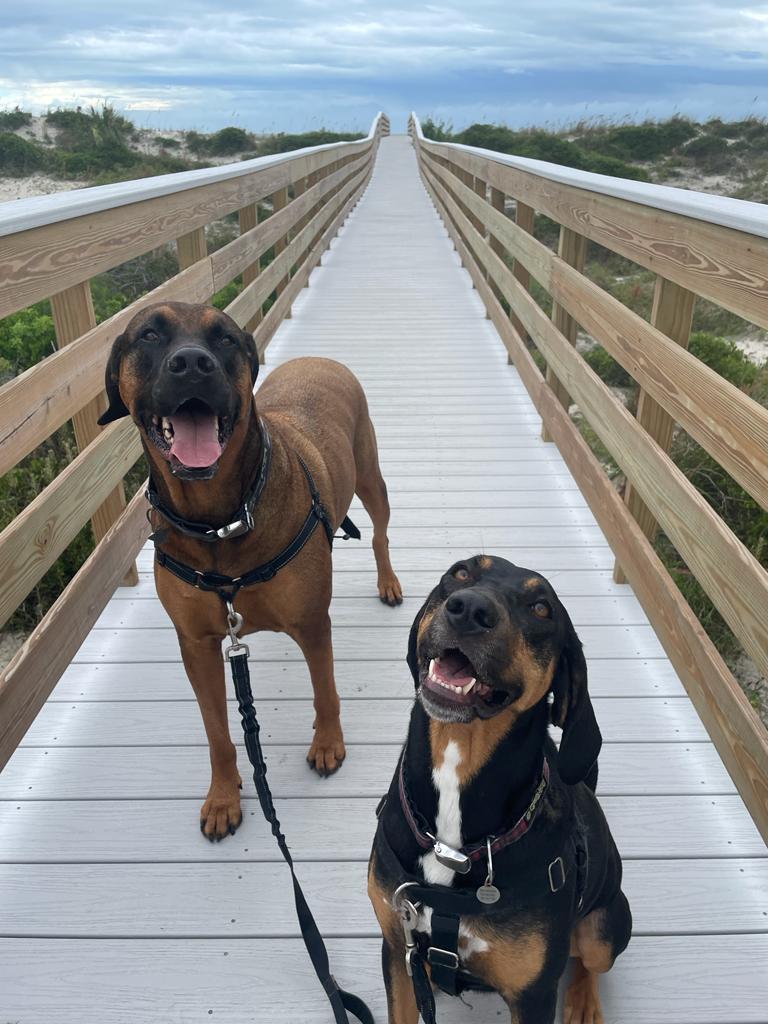
But after about ten minutes of frolicking, he falls out.
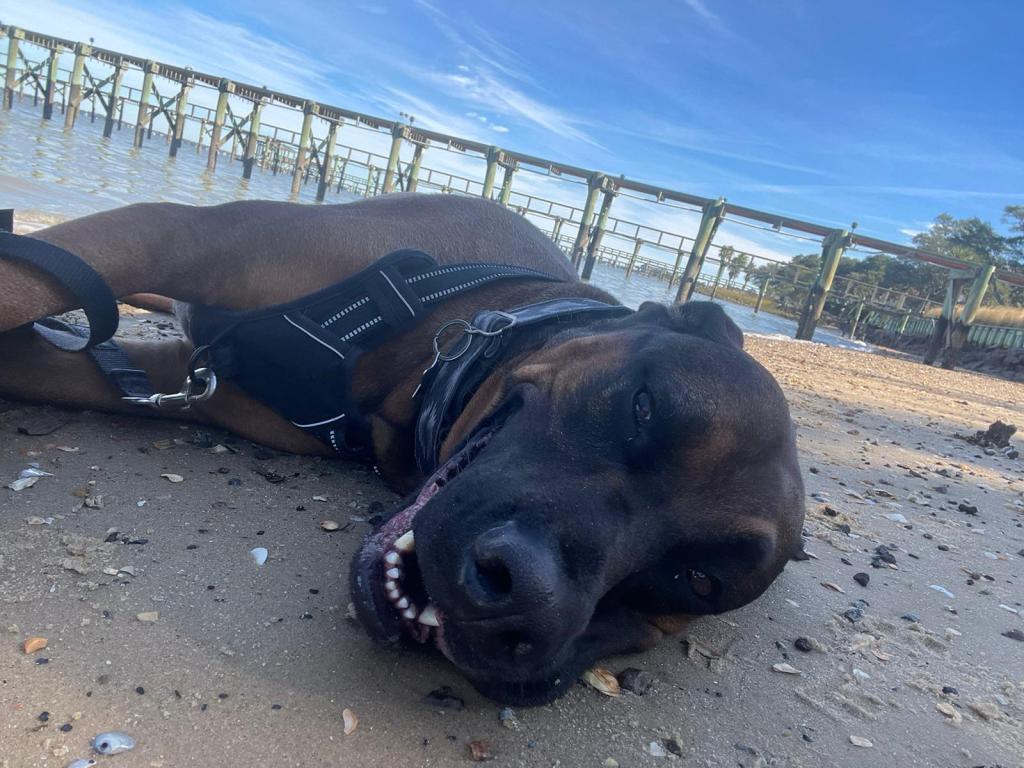
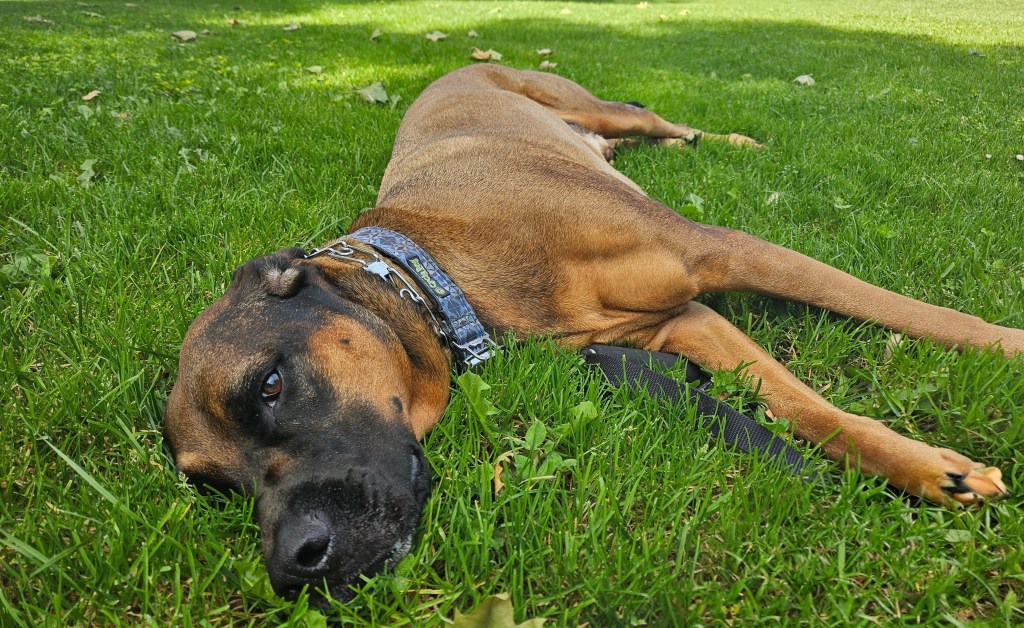
And this can be a problem. Once he’s down, he’s down, and he’s not getting back up until he’s good and ready, no matter how many cookies are put in front of his nose.

Paddleboarding is a whole other story. We brought him on a paddleboarding adventure during his very first weekend with us, thinking he’d then be primed to feel comfortable on a board and love being on the water.

We were wrong. As it turns out, Titus thinks paddleboarding was invented by the devil and water sucks. We even tried shifting gears to an inflatable kayak, but Titus let us know how he felt about that before we’d even put the boat in the water.
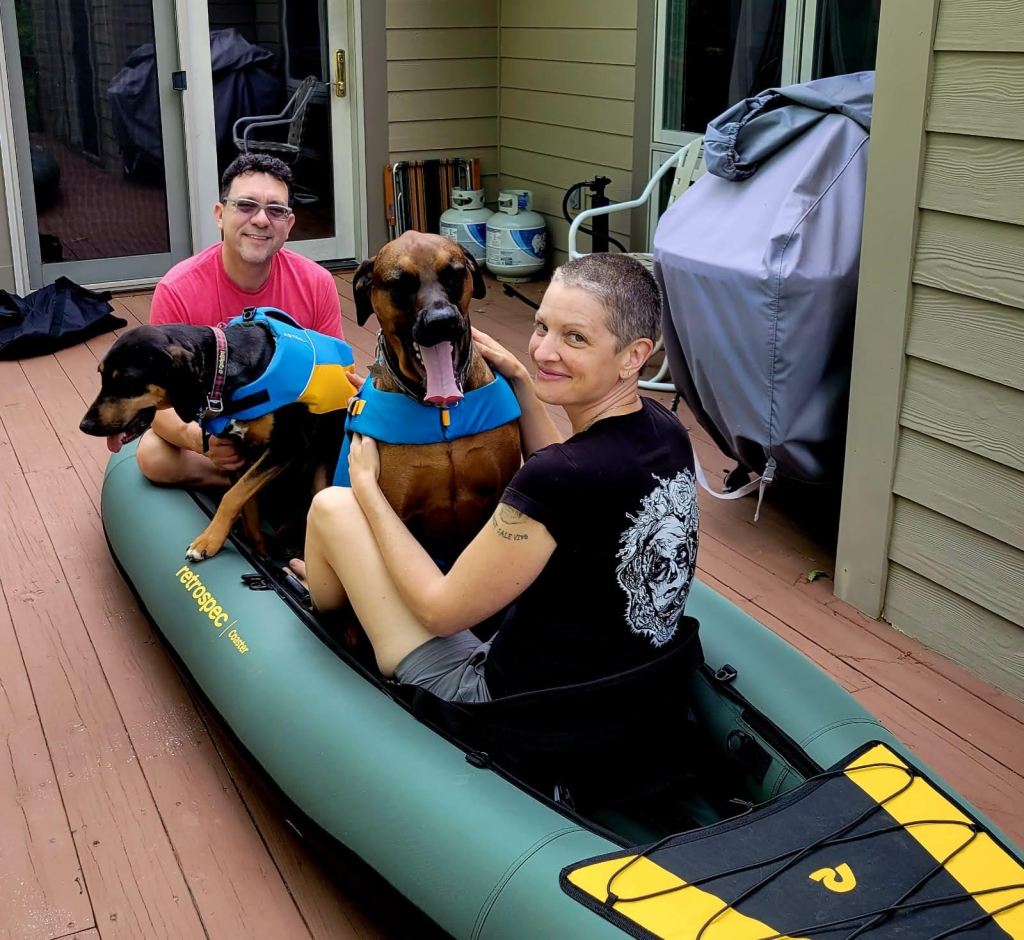
“Hard pass.” – Titus

When we did get it in the water, he sat right on top of me, rigid as a stone, until I rowed us back to the dock. That was his final water-based adventure.

Despite his lack of grit and hatred of water sports, we love our darling, giant beast, even when he won’t stop whining and we have to do this:
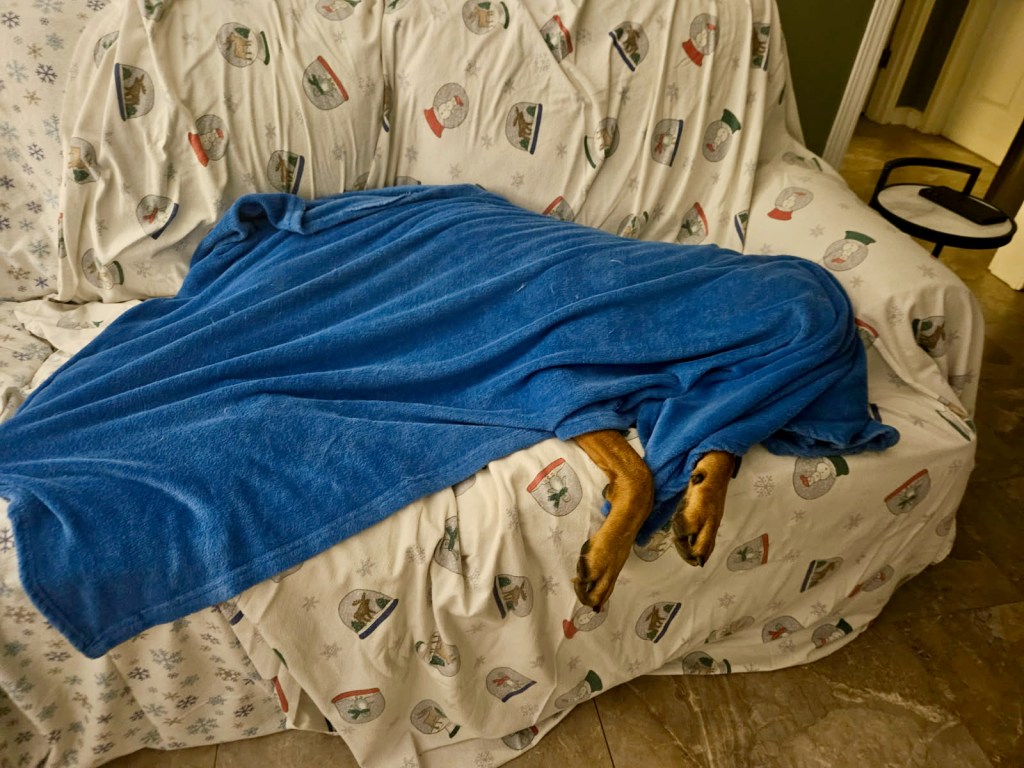
It works much like putting a blanket over a birdcage: instant peace and quiet.

These days, unfortunately, all is not well with our sweet boy. One morning last August, I heard an alarming commotion – something between a bark and a scream, followed by a lot of banging – and found Titus in the front room, thrashing wildly on the floor. He’d kicked the coffee table across the room. He was foaming at the mouth. His bladder had emptied. After about a minute, his body stopped convulsing, and he lay still, eyes blank. A few minutes later, he sat up clumsily, drool still seeping from his mouth, then tottered to his feet.

The experience was spectacularly awful, and sadly, that was only the first. He’s had seven seizures since, four of which occurred after he’d been put on a heavy dose of anti-convulsant meds. We returned to the vet today and are going to try a meds change. Fingers crossed that it works.

But I’m not writing about this to bum myself, or my readers, out. Really, I just want to tell you all about Daisy.
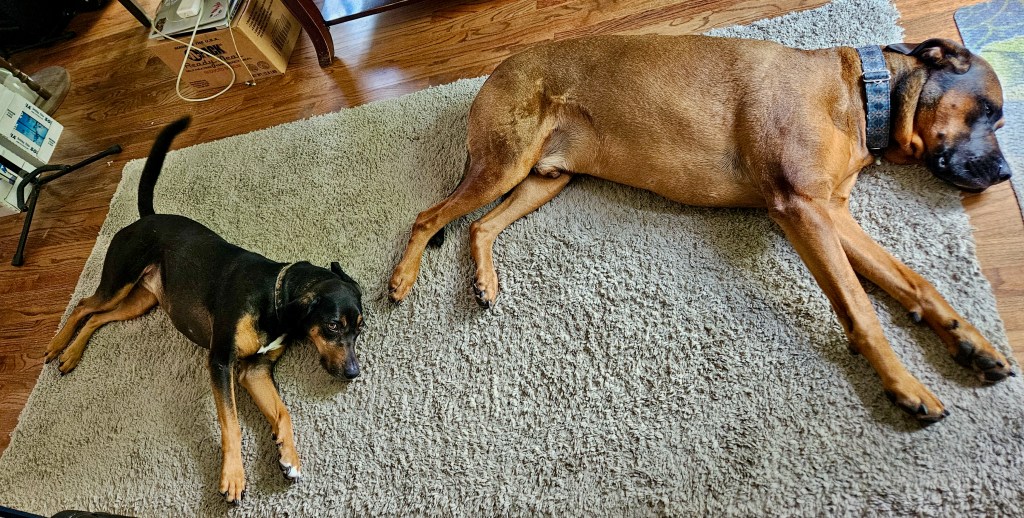
Titus with 60-pound Daisy. He really puts the “big” in “big brother.”

When Titus first started having seizures, we had to keep Daisy away, putting her outside or in another room or verbally instructing her to stay back until the incident was over. We understood that she wanted to be near him while he was clearly in distress, but we didn’t want her to get kicked in the face or freak him out further while he was coming to.

During his last episode, though, we didn’t have to intervene with her at all. Daisy watched from outside our magnetic screen door while Titus seized, then kept watching as he lay still on the floor. It wasn’t until he’d stood up and shaken himself off that she came inside, walked up to him, and gently began cleaning his fur. It was truly the sweetest thing in the world.

Years ago, I said I was going to start a podcast called The Improbable Upside. (I never did, but who knows…maybe someday.) Each episode was going to center around an unexpected, good thing that came out of a shitty situation. In the case of Titus’ seizure disorder, the improbable upside has been witnessing Daisy’s nurturing love and affection for him. Titus and Daisy get along just fine, but there’s an undercurrent of jealousy in their relationship, especially on her side. Seeing her take on the role of his caregiver is so heartwarming. It certainly doesn’t make the seizures worth it, but it helps to ease the sting.
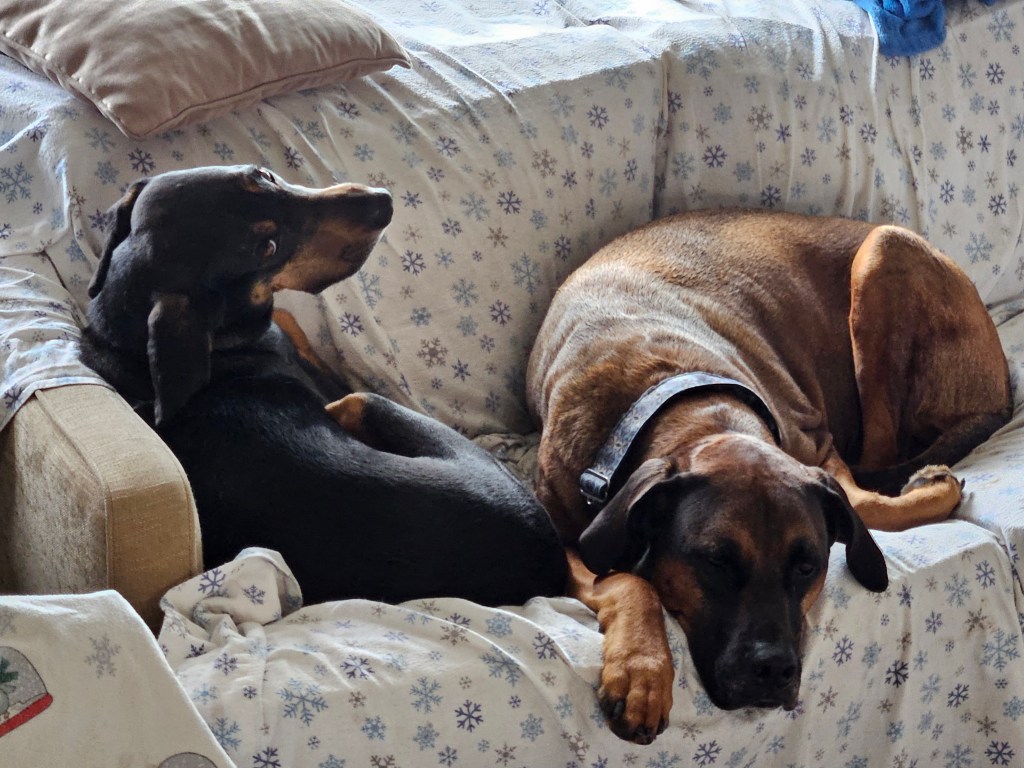
“I got you, bro.”

Share the Love (Gratitude, Part III)

I’ve written a couple of times (here and here) about a gratitude challenge my mom, sister, and I completed from 2019-2020. We liked it so much that this year, we embarked on a new one. Each month, we send someone in our lives a message of gratitude, detailing things we appreciate about them. This can be done by card, email, text, etc. The platform doesn’t matter as long as the message is conveyed.

After six months of engaging in this challenge, I have a recommendation for everyone on Earth: YOU SHOULD DO THIS. Truly, the impact is staggering, while the required effort is minimal. Whether the format is a card, email, or text, the message doesn’t take long to craft, and the process of writing out what you love about a person is really heartwarming. Then, there’s the effect on the receiver. Imagine it: you go to your mailbox, open your inbox, or check a text, and what you find is a spontaneous outpouring of admiration from someone in your life, explaining how much you mean to them and how awesome you are.

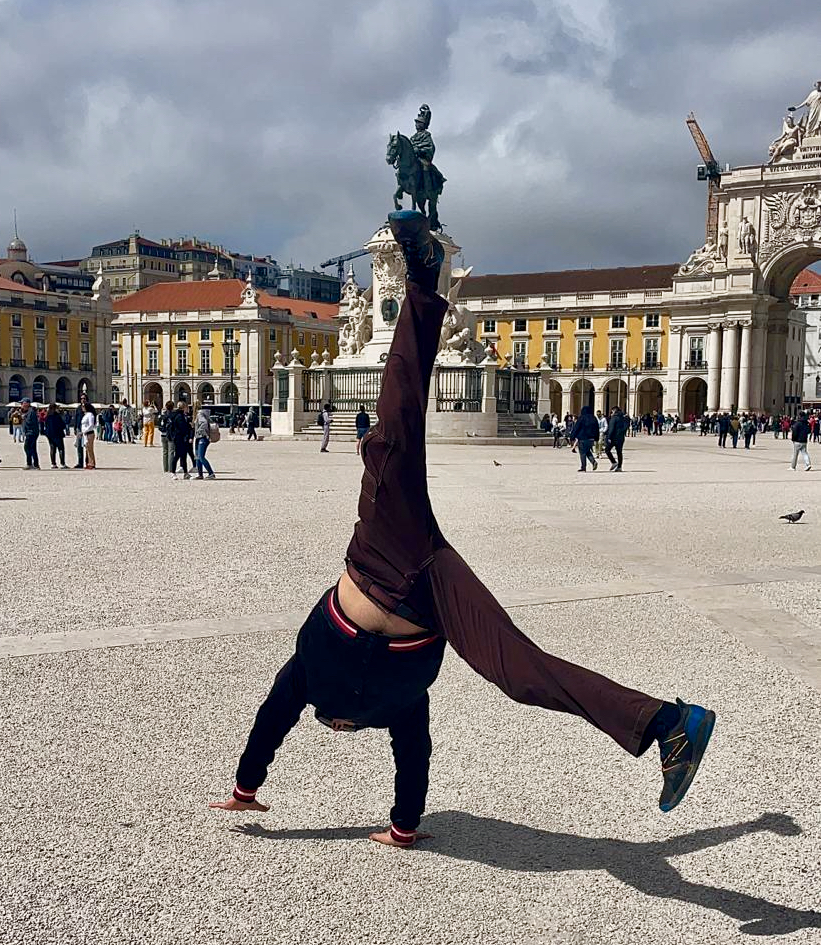
If a photo could represent what this challenge has been like, it would be this:

Or maybe this:

That is to say, it’s fabulous, and if you’ve been looking for a simple strategy to make life better, here it is. In an environment of doom-scrolling, apocalyptic media, and endless bickering, this is the perfect way to insert some much-needed joy into the world.

Messy

After Dad died, I cried every day for a year. Before then, I pretty much cried annually, and while I recognized that wasn’t the healthiest practice, I still considered it a point of pride.

It was interesting timing, becoming an emotional basket case right after Dad’s death. Dad wasn’t a fan of emotions. In my early childhood, he identified me as “too sensitive” and taught me how to think my way out of uncomfortable feelings. There’s no point in crying; it doesn’t change anything. Nightmares aren’t scary; they’re not even real. Sure, that’s sad, but it is what it is. Etcetera etcetera – the basic message being: bad feelings serve no good purpose and should therefore be logicked away.

I loved my dad. I admired him, wanted to make him proud, and valued our connection. And so, as my grief counselor so eloquently put it, in the early years of my childhood, Dad and I worked together to cut away a key part of me – my highly emotional self – and set it out to sea.

Now, if it had actually gone out to sea and disappeared over the horizon, all would’ve been well, but that’s not how a human system works. The stuff we ignore or suppress lodges itself in the body, then creeps out in other ways. In elementary school, I wrote stories that centered around conflict, with characters constantly shouting at each other. This baffled my parents, since we didn’t have a “yelling house.” Where was this melodrama coming from? At age 12, I was diagnosed with TMJ disorder and started wearing a night guard to keep from grinding my teeth down to nubs. Around that same time, migraine headaches became a regular thing. Later, I turned to numbing agents like smoking and drinking – anything to hijack emotions or turn them off completely. My body had plenty of messages for me, but I ignored them, having fully embraced my stoic, tightly-controlled sense of self.

At almost-50, I finally feel ready to relieve my body of its burdensome store of stifled emotions. Some of the work is underway, like validating negative feelings when they show up. As a mental health worker, this is something I’ve done for others for well over twenty years, so I suppose I’m a bit overdue in affording myself the same consideration. It’s actually a very simple act – far more so than analyzing the shit out of vulnerable emotions in an attempt to turn them into something else. I’m so well-versed in that process, though, that it’s hard to remember, in the moment: It’s okay to feel sad about this. It’s okay to feel nervous about this. It’s okay to feel discouraged by this. But I’m working on it.

I’m less sure how to tackle the other part: releasing all the feelings my body has smooshed into various muscles, joints, and organs over the past four decades. I talked with someone recently, however, who said that’ll be my heart’s work, not my brain’s, and that was a relief to hear, cuz when I asked my brain to figure out an emotional unclogging strategy, it just sent back the shrug emoji.

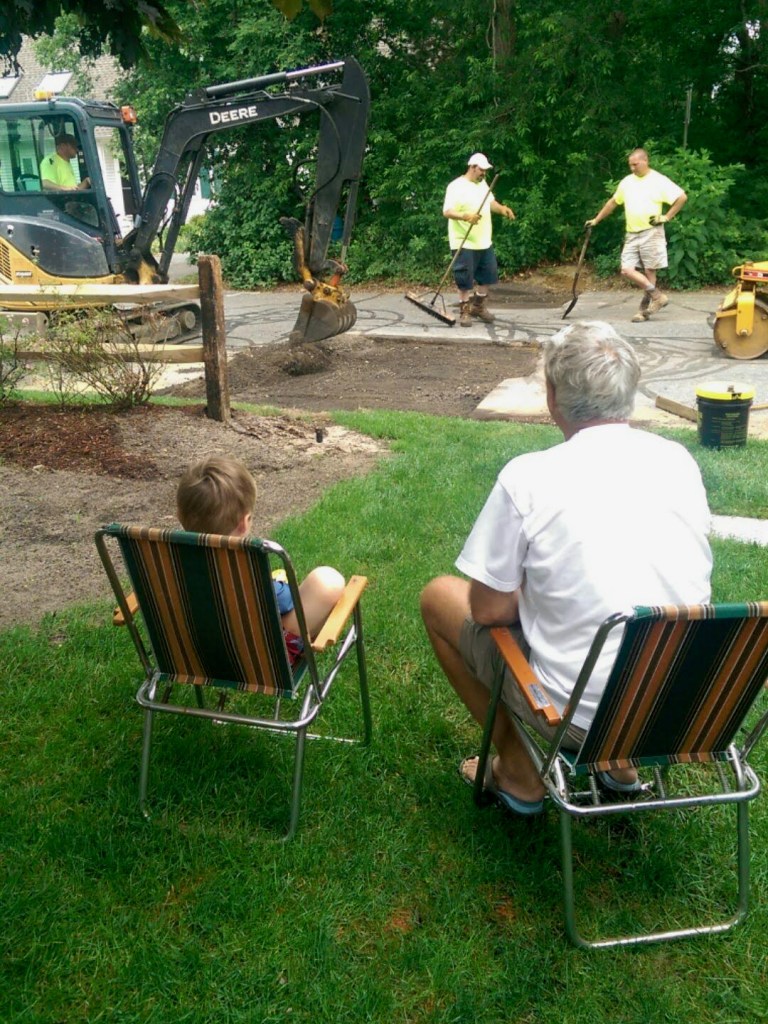
They say our ancestors live in our bones, so I like to imagine that Dad and I are doing this work together, kind of like a post mortem group project. That being said, Dad did love to delegate, so I see our group project more like this scenario, when Dad took out a couple of lawn chairs so he and his grandson could watch these guys fix the road:

In the case of my current project, as I toil and question and fail and succeed, I’ll picture Dad sitting in a lawn chair nearby, leaning slightly forward with his hands in his lap, saying, “Good job with all that emotion stuff, kid. Keep it up.”

We Finish Each Other’s…

My husband JR is an excellent sleeper. He can sleep anywhere at any time, entirely unconstricted by conventional boundaries. It doesn’t matter if we’re in the middle of a dinner party; he’ll leave the table, move to the nearest flat surface, and go to sleep. While I have an extensive, regimented nighttime routine, carefully developed to combat pervasive insomniac tendencies, JR needs no preparation whatsoever. He just falls asleep. It’s astounding.

The other night, JR went to sleep a couple hours before me, which is the norm. When I found him in bed, fully dressed with his glasses still on, I debated whether or not to wake him. Sleeping JR can be a real brat. Here’s a typical example:

Me: “JR, you’re snoring.”

JR: “You’re snoring.”

Me: “No, I’m lying here listening to you snore. Could you roll onto your side?”

JR: “No.”

Me: “JR…”

JR: “Just go to sleep and you won’t hear me!”

Ahem.

Out of concern for the wellbeing of his glasses, I decided to wake him. After his eyes popped open, he asked, “How did I get here?” I replied, “The same way you get everywhere,” then concluded with: “Free will,” at the same time he said, “Magic?”

This exchange brought to mind another recent occasion when we offered very different simultaneous answers. Someone asked us for the key to our relationship’s longevity, and JR replied, “A sense of humor,” at the same moment I said, “Time apart.” JR loves to tell that story. I maintain that both factors are important.

Besides his ability to sleep, JR has another magical power: an unparalleled sense of direction. This is something I lack entirely, so it makes no sense to me when I start to guide him somewhere and he says, “I know. I’ve been there before.” Seriously, what the hell does that have to do with anything? If you plunked me down in the center of my hometown right now and asked me to take you to the house where I grew up, I would not be able to do it. JR, on the other hand, has internal maps and intuition that are baffling to me. When he helped me move to Orcas Island back in 2012, we arrived after dark and drove around the island for about an hour, trying to locate the AirBNB where I’d be staying for three months. The directions I’d been given didn’t correspond with reality, and when we found ourselves in downtown Eastsound for the third time, I started to panic. JR, however, remained totally chill. He set the directions aside and said, “I think I know how to get there,” then proceeded to drive us straight to the house. Upon arrival, I felt like I’d just watched the parting of the Red Sea. That was eleven years ago, and I’m still in awe.

JR finds my lack of directional prowess equally baffling. He’s shocked every time I don’t know how to get somewhere, as well as every time I do know how to get somewhere. What can I say? I like to keep him on his toes.

While JR and I aren’t always on the same page, I think we’re at least in the same book. I’ll call it I Don’t Know, It Just Works: Life With a Couple of Goofballs. It’s not finished yet, but when it is, I guarantee it will be interesting enough to get banned in Florida.