This year, I’m bound and determined to appreciate winter, as I’ve made a commitment not to dread or fear anything over which I have no control (a mandate I need to repeat to myself about a thousand times a day), and impending winter falls squarely into that category.
I shared my new intention with one of the leaders of a retreat I attended last weekend, and he told me the following story:
“The other day, I was directed to commune with a tree. In our conversation, the tree told me that it’s thankful to shed its leaves each year. It feels so much lighter and freer without them.”
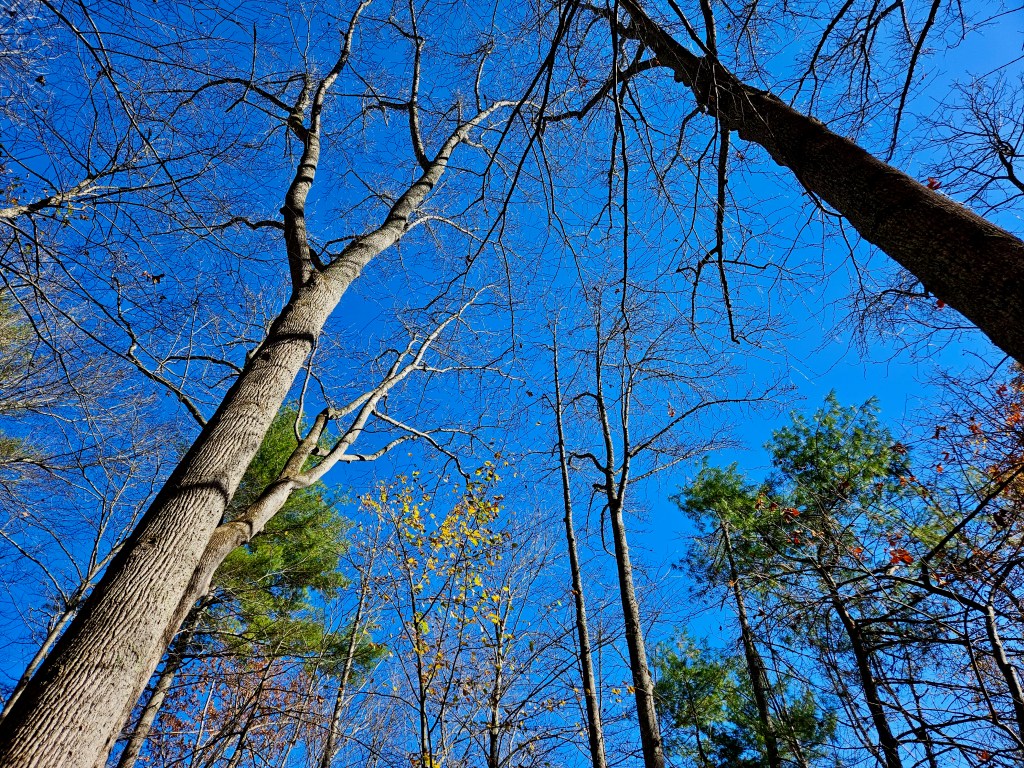
This was a helpful reframe, since the sight of skeletal, leafless trees usually makes me sad. Now, when I look up at a sea of bare branches, I’ll think, Well, don’t you look joyfully unburdened?
Another leader at the retreat took us on a walk through the woods and brought our attention to the fallen leaves. She mentioned that people usually think of the brown, brittle leaves as ugly, but in fact, they’re a shade people try to replicate in their dyes and clothing because it’s so beautiful. In addition, they play a critical role in the forest’s life cycle, breaking down to nourish the soil.
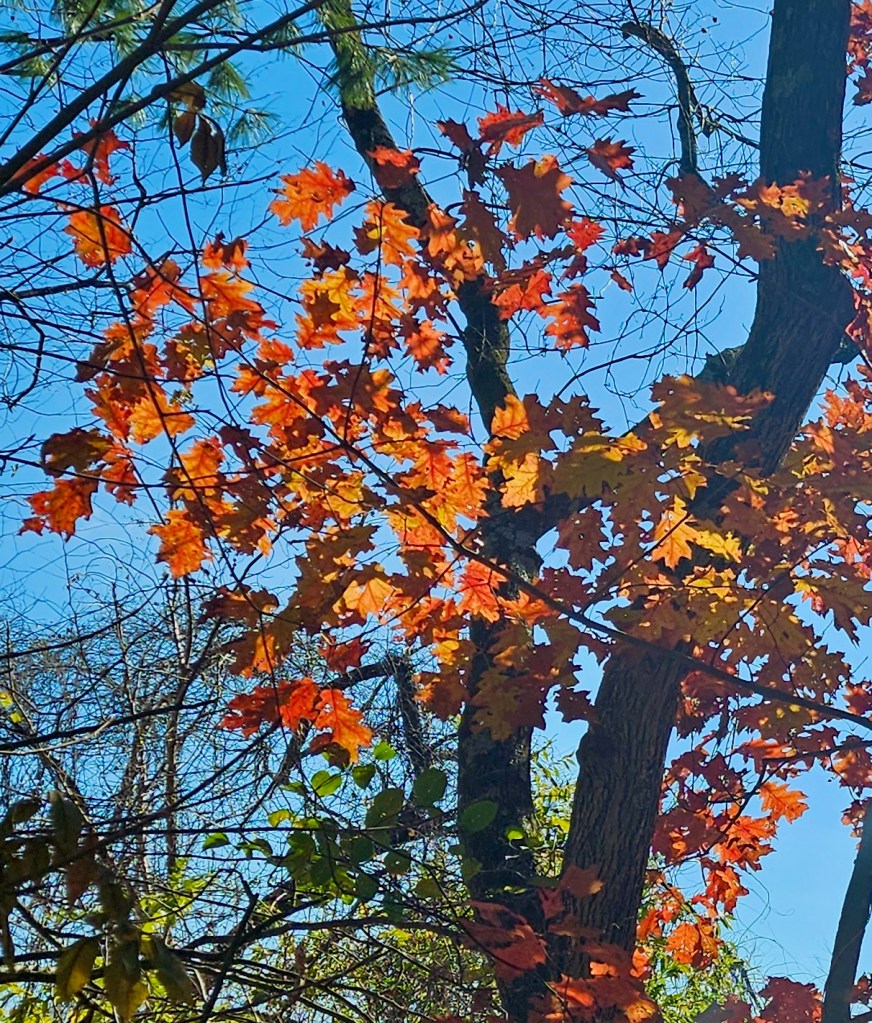
Again, this shift in thinking was a welcome one. Normally, when I see autumn leaves, I think, They’re pretty, but they’re a harbinger of evil winter. Now, when I see the leaves in their final stage, I’ll think, They’re pretty, and they’re going to feed the forest.
I recognize that a lot of our personal happiness depends on positive reframes, so I’m excited to incorporate these gems of wisdom into my emotional lexicon as winter approaches. Over the next couple of weeks, when I pass this part of my walking route:
…I won’t think, OH NO, THE COLORS ARE ALMOST GONE! WE’RE DOOMED!!
Instead, I’ll remind myself that when those final strips of red and yellow have faded at last, the trees can heave a sigh of relief. Free from the weight they’ve carried, they can shift energy to their roots, then hunker down for a long-awaited, well-deserved rest.
The last time there were reports of a looming Sriracha shortage, my sister mailed me three 28 oz bottles, and Mom sent six bottles along with a Sriracha t-shirt. That shortage never materialized, but I was thrilled with my stockpile. Possessing over 15 pounds of Sriracha made me feel like a super hero.
Now that the Sriracha shortage is real, I’ve received an outpouring of support from friends and family. I imagine my loved ones seeing the headlines and thinking, Oh, no – what will Kelly do?? as they picture me lying on the floor of my kitchen, slowly starving to death in a puddle of tears.
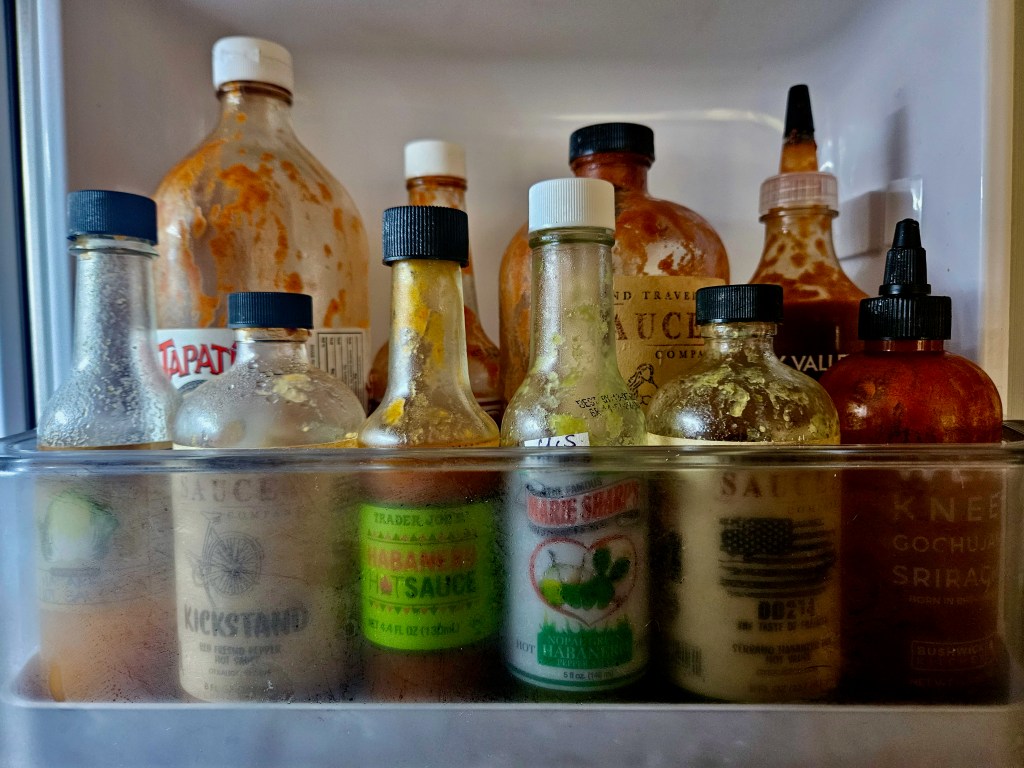
To those of you who’ve shared your concerns: first of all, thank you so much. I had no idea how much love I’d receive in the wake of a Sriracha shortage. Secondly, fear not! In the spicing-up-food department, I’m doing just fine. Here’s my fridge’s hot sauce shelf:
(There’s overflow in the pantry.)
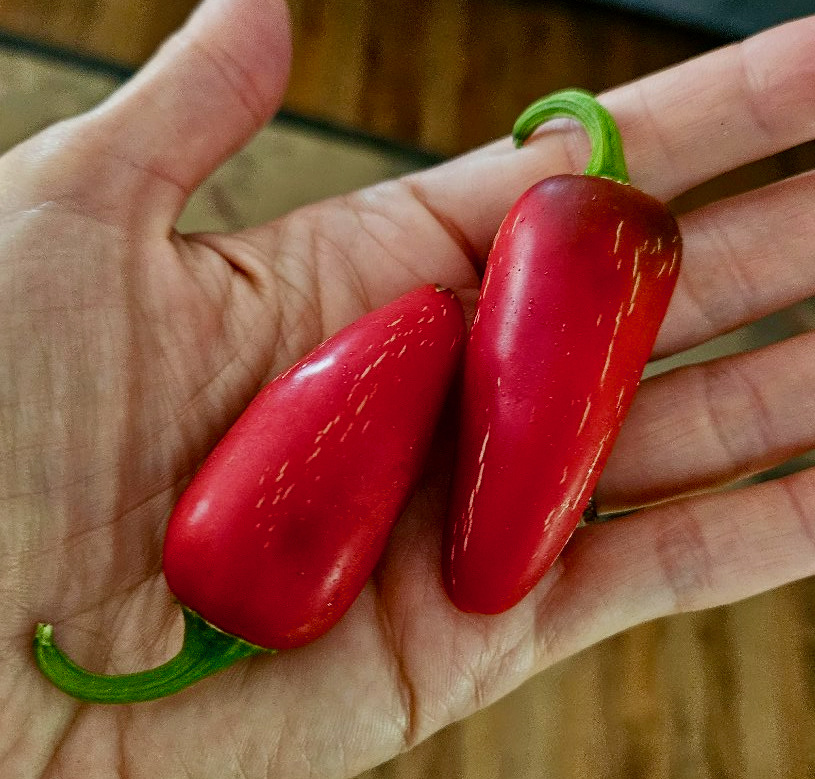
I’ve also discovered a Sriracha substitute from Sky Valley that’s quite delicious, and my husband is busily growing red jalapeños so we can make our own. Here’s how many we have so far:
Better than zero! And aren’t they pretty?
I still miss my Huy Fong standby, but it’s always good to break a dependence, right? I thought I couldn’t live without it, and it turns out I can. That might be even better than having 15 pounds of Sriracha.
In my final week on Orcas Island, where I’d lived alone for three months to focus on writing, every ending made me cry. The end of a book. A hiking trail. A meal. A football game. With each one, I choked back sobs and wiped away tears, wondering how I’d become so fragile. After a few days, I figured out the pattern. My life on the island was about to be over, filling me with so much grief that all other endings did the same.
About a month ago, I started to experience similar, spontaneous bouts of distress. I’d be in a meeting, on a walk, or spending time with friends when my heart would start to race and a lump would rise in my throat. Having been through this before, it didn’t take long to pinpoint the cause. I’m nearing the end of a book I’ve been working on since 2012, and no matter how exciting it is to approach the finish line, I always get a bit sad when I finish a piece of writing. For the past eleven years, I’ve been hanging out with this cast of characters on a world I created, and all of that is coming to an end.
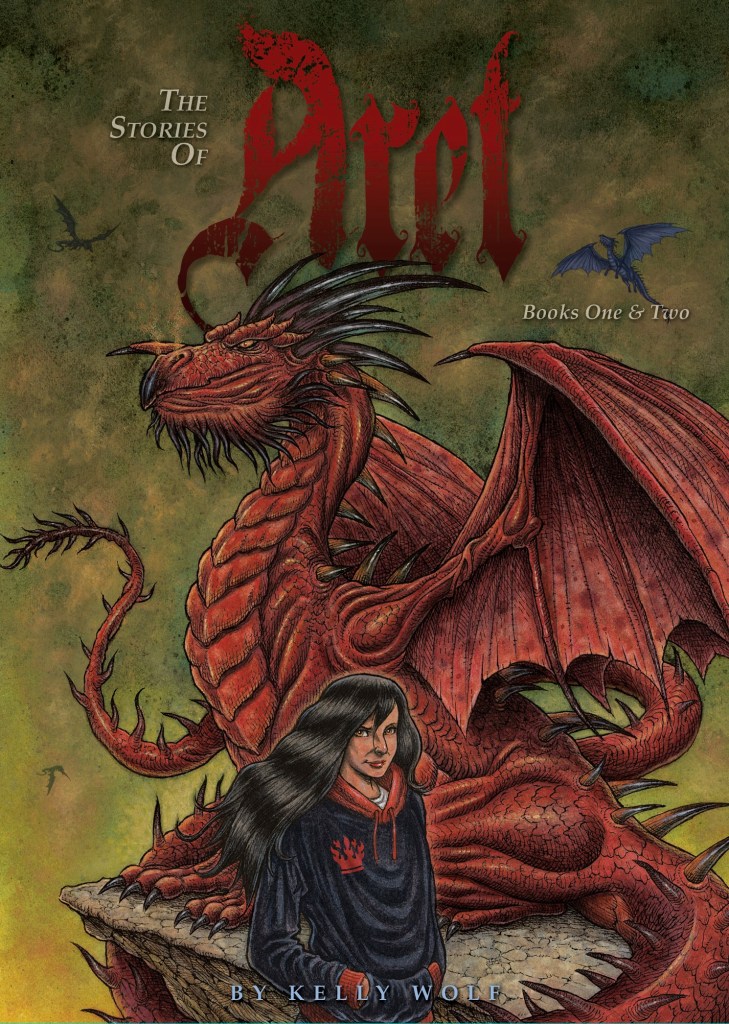
But there’s another layer to the grief that accompanies the completion of this story. My dad, who passed in 2020, was one of its first readers, critics, and fans. When I wrote the Acknowledgements section of the first part of Aret back in 2016, I began with this:
Before reading Aret, my father (who reads about five books a week) had never read a single book in the fantasy genre, as he had zero desire to do so. But because he is meticulous, highly critical, and frank (which also happens to be his name), I asked him to be one of my first readers, then burdened him with each major revision (I believe there were four or five, although he estimates the number at closer to a hundred). With each reading, he’d take several pages of notes, and we’d spend hours together so I could “defend my dissertation” while he inundated me with questions and critiques. Although I know he’d prefer it if I wrote about spies, the Old West, fly fishing, or the Napoleonic Wars, he worked tirelessly on Aret. Dad – thank you.
I wrote those words with the confidence of someone who had no idea what life would bring. It never occurred to me that Dad would die before I finished the story. I thought we’d be on the journey together – him brutally criticizing every word while also celebrating the characters and plot points that brought him joy. As I reach the final page, there is a huge, unmistakeable void in my writing process. Dad should be here to see how it ends, and he isn’t.
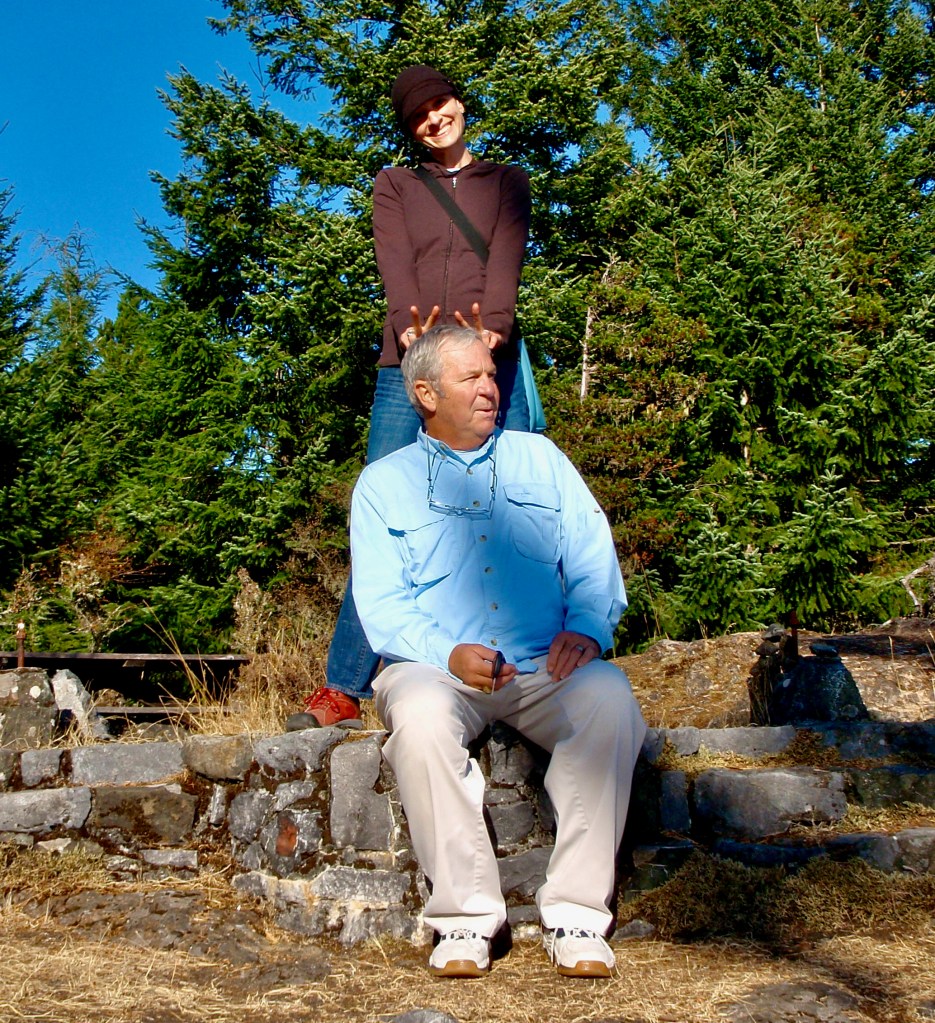
A few days ago, I looked through photos of my parents’ visit to Orcas, back when the world of Aret was just coming to life. I found this shot of Dad and me at the Little Summit in Moran State Park:
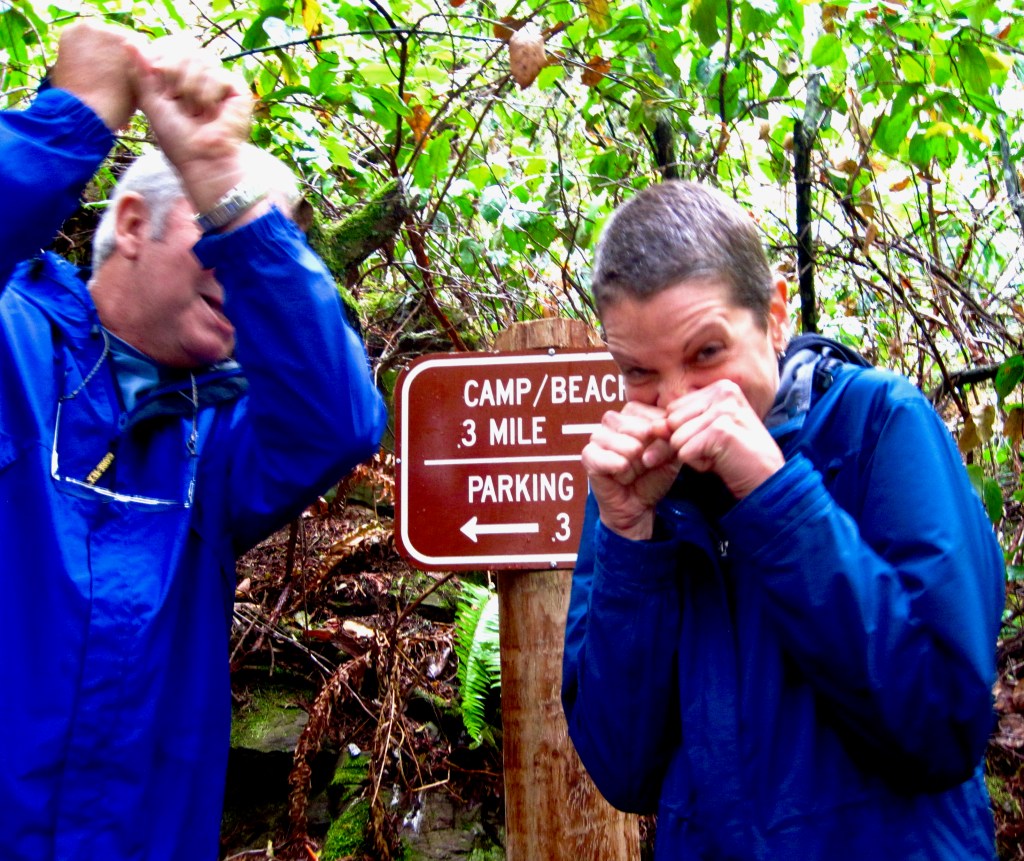
And this one of Dad beating me with an imaginary baseball bat after I accidentally took him on an hourlong hike that was supposed to be half a mile:
(Anyone who’s hiked with me knows this is par for the course, but Dad was unamused.)
Photos and memories like these help to balance the grief of his loss with gratitude for the silly and loving relationship we had. He helped me develop a thick skin, along with a greater ability to accept criticism, and that made me a better writer.
Thank you, Dad, for everything. What I tell myself is that you would’ve hated the way I ended the story, and you would’ve fought me on it, and it would’ve been a whole thing. So maybe it’s better this way. 😉
But really, I just miss you, and I wish you were around to help me navigate and celebrate this ending.
Embedded in our psyches, we all have a series of scripts that guide our lives. Essentially, these are the stories we tell ourselves about our likes, dislikes, abilities, flaws, etc. Sometimes they’re helpful, as they allow for shortcuts in decision-making. Other times they get in the way, like when we hold on to scripts that are outdated or allow them to limit our opportunities.
One of my personal scripts is: “I’m an introvert. I don’t like parties or crowds.” So when I started a four-week drumming workshop and the instructors said we’d have the option of marching in the Mardi Gras parade at the end of it, I thought, Yeah, that won’t happen. I made a vague commitment to participate in the parade if the weather report for the day didn’t include cold temperatures or any sort of precipitation. Considering it was wintertime in the mountains of Western North Carolina, I felt pretty safe.
As it turned out, my confidence in the region’s crappy weather was misplaced. When the forecast indicated that Parade Day would be warm and dry, my heart sank a little. When my sister said she and her boys were coming to Asheville to watch JR and me perform, I knew my goose was cooked. It was happening. Script be damned – I was going to be in a parade.
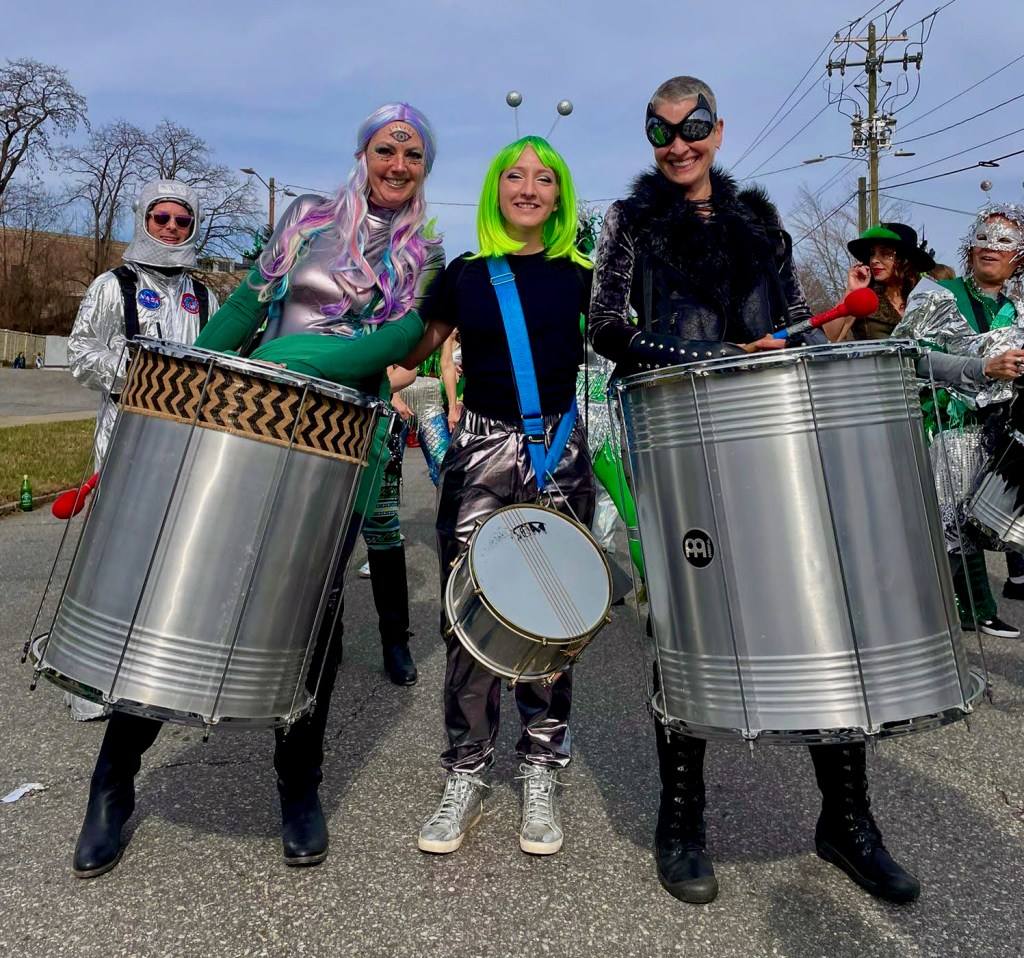
And here is why scripts don’t always serve us: the parade was amazing. Thousands of people in colorful, alien-themed garb had come together after a long, anxiety-soaked hiatus, and for the first time in almost three years, I got to feel the buzz of energy that emanates from a joyful crowd. The smiles were huge. The costumes were jaw-dropping. Folks were dancing in the street. I was surrounded by cheers, music, and laughter, and it was awesome.
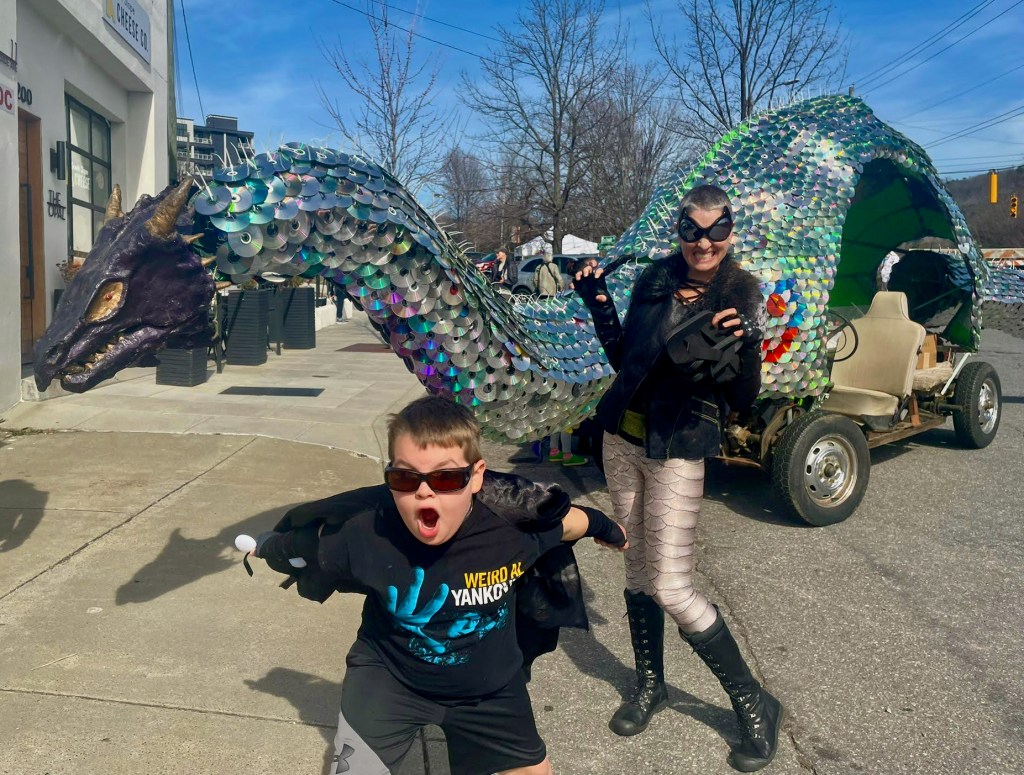
If I’d followed my script last weekend, I never would’ve seen my nephew flee from a giant CD dragon…
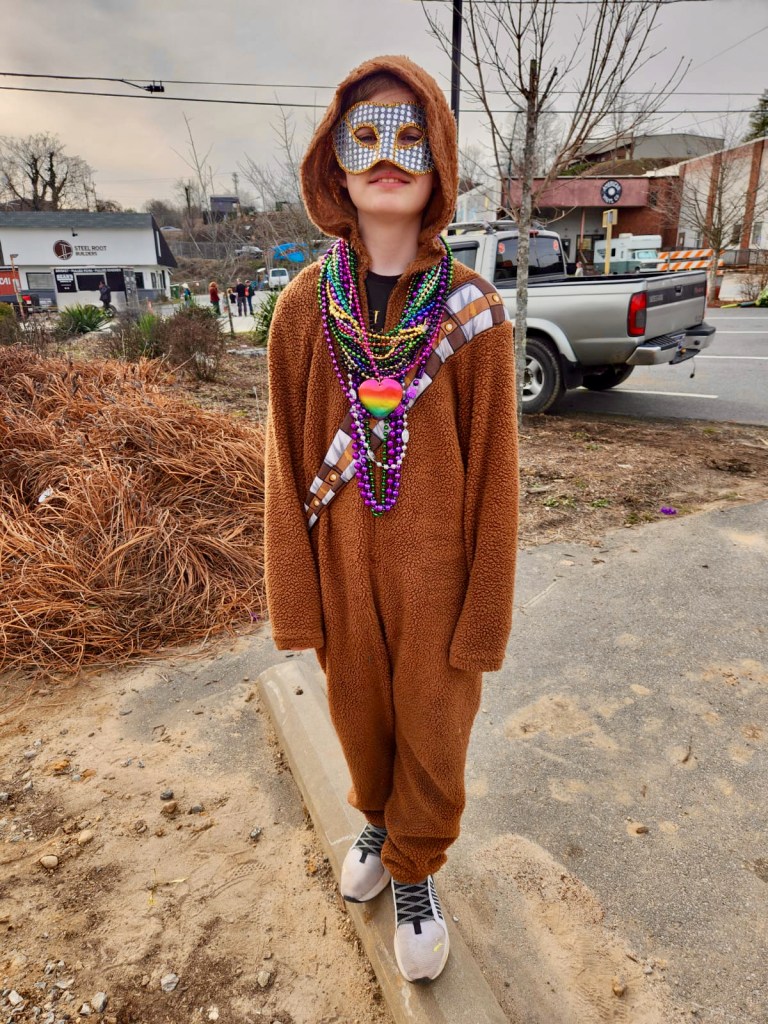
…or watched another nephew become a bead-bedecked Chewbacca…
…or gotten to showcase my fancy new drumming skills.
I wouldn’t have felt the flush of happiness each time kids in the crowd started to dance as our crew passed, their eyes growing huge when they saw the size of our drums. I wouldn’t have felt the warmth in my chest each time we rounded a corner to find a sea of smiling faces. I would’ve denied myself the joy of making music with and for my friends, family, and community.
This experience was an excellent reminder to question the set of stories I’ve chosen to believe about myself, even tried-and-true ones like: Parties Are Kelly’s Nemesis and Parades Involve Crowds, and Crowds Are Torture. Perhaps now I’ll change the parade one to: Sometimes parades can be less than horrible.
On a recent walk, I came upon a man standing on the side of the road. He had a pretty creepy vibe, but since I was on a trajectory to walk right past him, I figured I should probably say something. As I passed, I pushed my headphones off one ear, made eye contact, and said, “Hey, good to see you!”
Wait…what did I just say?
Yup. “Good to see you.” That’s what I chose to tell a creepy man I’d never seen before in my life. After two years of limited contact with other humans, my interpersonal muscles have atrophied. I can’t even manage a cliché conversation. At this point, folks, what I need more desperately than anything available from Pfizer or Moderna is a social skills booster.
I envision the SS booster re-instilling basic abilities like:
At a store: How to make idle chit-chat with the teller
At an event: How to engage in simple, unoffensive group conversation
In daily life: How to have a non-mortifying, two-second encounter with a stranger
Given how long the pandemic’s dragged on, I doubt I’m the only socially-impaired person flailing around the world. I recognize a booster shot may be unrealistic, but could someone please open some sort of post-pandemic finishing school?
My little family (two humans + two dogs) is staying at a very cool AirBNB on the South Carolina coast this week. The place is amazing – spacious, beautifully appointed, etc. I love it, except for one thing. The only available cutting board is made of glass.
Lots of people like glass cutting boards, even though they are the absolute worst. Last night, as I cringed my way through the process of mincing a whole head of garlic, I generated a list of other things people like that I don’t understand. (Please know this list is in no way comprehensive. I don’t like lots of things.)
#1 – Porn. From my viewing experience, porn is equal parts boring, depressing, and infuriating. Granted, I haven’t watched porn in many years, so maybe it’s improved….? (Just kidding, I’m sure it’s still terrible.)
#2 – Romantic comedies. See “porn” explanation above.
#3 – Also related to porn, calling anything you like blank-porn (e.g., food porn). Blech. Stop equating good things with porn. Especially food. Food is awesome. Porn is dumb.
#4 – Referring to oneself as a whore based on one’s interests (i.e., “I’m obsessed with shoes. I’m a total shoe whore”). This makes no sense. Whores get paid. Did you get paid to buy those twelve pairs of shoes? No. No, you didn’t.
#5 – Glass cutting boards. FOR THE LOVE OF GOD WHY DO THESE EVEN EXIST? The last thing any cook needs is a cutting surface that’s abrasively loud, ruins knives, and provides a continual stream of nails-on-a-chalkboard heebie jeebies. If I believed in Satan, I would blame him for creating these evil pieces of shit.
#6 – Kombucha. All I have to say about this rotten tea is 🤢 .
#7 – Reality TV and talk shows where people act like complete idiots and scream at each other. Again, see “porn” explanation above.
#8 – Shopping. In theory, I don’t mind shopping. Even knowing myself as I do, when I need to purchase something, I can psyche myself up for it. Right now, for example, I’d like a new pair of waterproof sandals, and I am delusionally telling myself it will be a fun experience to shop for them. But what I also know is this: shopping has a wholly soporific effect on me. As soon as I walk into a store, I want to curl up on the floor and go to sleep. Therefore, in an effort to remain conscious, I spend as little time in stores as possible. My husband is the opposite. He loves to shop, but not with me. On the rare occasion when we do shop together, if he sees me approaching, he’ll run in the opposite direction. This is because I only ever have one question for him: “You ready?”
All right, that’s enough. This type of exercise is a slippery slope, leading inevitably to the land of I Am All Alone in the World, which, I realize, is not true.
Back in January, I wrote about the 52-week gratitude challenge my mom, sister and I had embarked on three months earlier. Last week, we arrived at our final topic: Lessons Learned/Did this challenge change you? Though we should’ve finished back in October, we had to hit pause on a few occasions, namely:
My sister’s hospitalization, cancer diagnosis, and beginning of treatment (March-April)
Dad’s sudden death (September)
My sister’s stem cell transplant and recovery process (October-November)
Quite a year. I think there might’ve been a plague, as well. And a bunch of other gruesome shit.
🤬
As it turns out, choosing that particular challenge was eerily timely. Given all the trauma and tragedy of the past year, it was a true blessing to have a designated time each week to focus exclusively on gratitude.
Here are the final emails we sent each other:
My Response:
To be perfectly honest, when I look at this week’s subject, part of me is like: Barf! Screw you, Gratitude Challenge, my lesson learned is that everything sucks!
Ahem.
Okay, so really what I learned over the course of this challenge is that it is always an option to be grateful, rather than focusing on struggles and suffering. Concentrating on points of gratitude is best for my mental health, physical health, and general state of well being.
The past year has certainly provided its share of challenges, and having this weekly exercise has provided a consistent reminder to shine the light on gratitude. Choosing to prioritize gratitude is the wisest choice. It feels better and is more beneficial, so why not do it?
I am grateful to both of you for hanging on over the last year+ to complete the challenge. It hurts my heart to think back on the breaks we’ve had to take over the past year, but I am grateful we’ve come through it together, and I am grateful for the honor of having you both in my life.
Love, Kelly
Mom’s Reply:
So beautifully stated, Kel…. particularly the disclaimer at the beginning!
But I think that that is what we’ve all learned in a nutshell: Even though everything sucks, there’s always something to be grateful for, and looking for those things helps to keep us calm(er), happier and sane. It’s quite remarkable that we chose to do a gratitude challenge during what turned out to be the worst year of our lives; and it certainly turned out to be a timely and beneficial choice.
Katy’s little sign in her kitchen says it so well: “Every day is not good, but there’s something good in every day.” Another expression I love is: “Keep your head where your feet are”. Focus on where you are, not where you’ve been or where you might go. My tendency has always been to spend a lot of time ruminating ….regretting things that did or didn’t happen in the past; worrying about things that may or may not happen in the future. But this challenge has helped me to stay focused on today and what is good about today. And there’s always so much to be grateful for.
I’m grateful for having made this journey with you, and for all I learned about you. Something I didn’t learn because I already knew: There’s nothing in this world I’m more grateful for than both of you.
Love, Mom
My Sister’s Conclusion:
I’ve taken so long to respond because I don’t really have much to add to all the beautiful things you both wrote!
It really has helped me get through this godforsaken year having these weekly emails to look forward to and to keep my focus on what is good and positive in our worlds. I learned that gratitude really is a mindset that can be cultivated.
I’m grateful to the children’s book club meeting I went to where I learned about this challenge, and I’m grateful that you both were willing to take on the challenge with me!
I’m grateful that we didn’t let misfortune and long breaks derail us and that we persevered together.
Now, what’s next?
Love you both so much!
💕
And…scene. Challenge completed. As my sister said, it’s time to pick the next one. I’ve done a little online digging and haven’t been inspired thus far, having found mostly kill-joy self-improvement projects focused on crap like budgeting strategies and home organization. Snore. I did see one about sending a personal piece of mail each week and may try that. I mean, who doesn’t love getting mail?
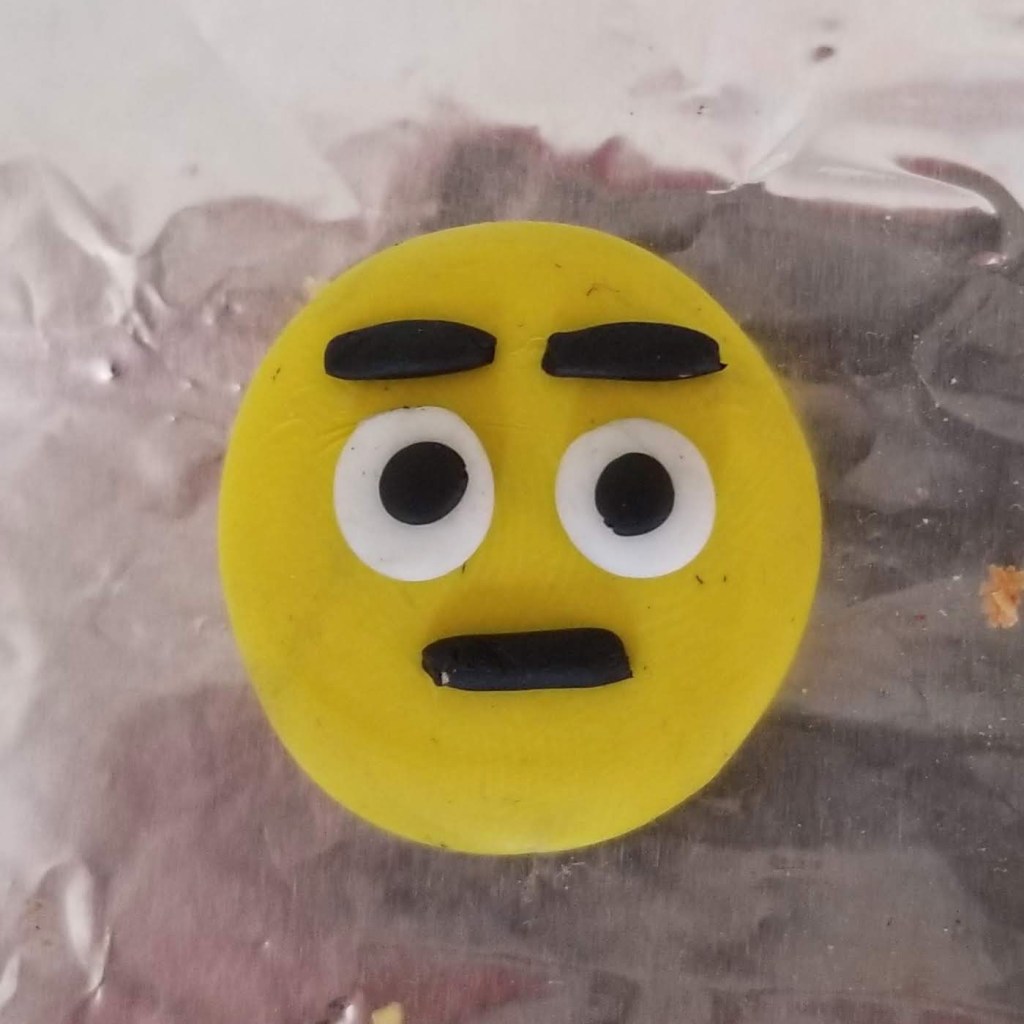
I know we’re all anxiously awaiting the end of 2020 while faced with the reality that nothing will be different as of 1/1/2021. That being said, I encourage everyone to try the gratitude challenge. I truly believe it saved Mom, my sister and me over the past year. Despite everything that happened, we were still inspired to send each other Bitmojis like this:
And who knows, maybe when you reach the final topic 52 weeks from now, life will be a little more normal. Maybe we’ll even get to see the bottom half of people’s faces again! Can you imagine?
For the past couple years, I’ve worked on a book of interlocking stories, all of which follow the lives of four siblings as they travel through the foster care system. Each chapter is told from a different point of view: the police officer who removes the kids; foster parents; the birth mom; social workers; the kids themselves; etc. In February, sixteen chapters in, I decided to go back to the beginning and work on revisions before moving forward. And then the world collapsed, and I stopped working on it altogether.
When I opened the document last week, I found myself reading about a cop sitting in a bar, drinking a beer and listening to a woman nearby talk to her friends. In the next scene, he waits in his patrol car while three kids step off a school bus. Well, shit, I thought. This is a pre-COVID world. And since I have no idea what a post-COVID world will look like, and I don’t feel like rewriting the whole book with the characters in masks and physically distancing, I decided the project needs to be shelved.
Book Three has been sitting around tapping its foot for years, and it’s time to give it some attention. Besides, spending time on a world with multiple wars and man-eating dragons seems like a pretty decent option right about now.
The last few months have been utter bullshit on both global and personal scales. While the world shut down in response to the COVID-19 pandemic, my dear sister was diagnosed with blood cancer. As protests erupted in response to police officers murdering people of color, our next door neighbor overdosed, requiring CPR at 5 a.m. from my husband and me. (Giving chest compressions when you’re not sure whether or not the person is already dead is not something I would wish on anyone. It is haunting.)
Also, somewhere in the midst of all this crap, our sweet cat Shmee died.
We are not amused.
Others have written about the pandemic and Black Lives Matter movement far more eloquently than I could ever hope to, and right now I could use a distraction from current horrors, if only for a few minutes. So I am going to tell a story about the day my dog and I almost fell off a cliff.
This was back in 2006, soon after we adopted Jasper as a goofy, big-headed, 1-year-old pup. We headed out on a hike with a couple of friends, intending to find a waterfall none of us had seen before. One of the friends was a paramedic and had a shift scheduled later that afternoon, but we figured we’d have plenty of time to complete the 8-mile loop before she was due to arrive at work.
About four miles into our journey, we saw a Trail Closed Ahead sign and merrily stomped past it. “How can the trail be closed?” we joked to one another. “Caution tape? A stop sign? This is the forest! It can’t be closed.”
Two miles later, however, we came to an abrupt halt as the trail dropped straight into a fathomless abyss. To our right, a cliff rose into the sky. To our left, the cliff plummeted into a ravine. About ten yards ahead, we could see where the trail picked up again, but in between our feet and the trail’s continuance was an insurmountable void. “Well…shit,” we said. We were a couple miles from the end of our loop. If we had to backtrack, we’d have six miles left, and our paramedic friend had an ambulance waiting for her.
I looked back the way we’d come. “Okay,” I said, “we’re not the first people to hit this point. Someone’s figured out how to get around it.” We searched along the cliff beside the trail until, sure enough, we found a rope. I tugged, and it held fast. Handing Jasper’s leash to my husband, I said, “I’ll climb up. If there’s a rope leading down the other side, I’ll let you know.”
I pulled myself up the cliff about fifty feet to discover – hooray! – another rope dangling down the other side. I called to my friends, then lowered myself down the rope to land victoriously on the trail at the other side of the ravine. After doing a little happy dance, I called to my husband, who was now at the top of the first rope. “I’m back on the trail!” Knowing it would be impossible for him to repel down the rope while holding a leashed dog, I added, “Go ahead and let Jasper go!”
What I didn’t consider as these words left my mouth were the ramifications of a 60-pound dog running free down a steep, 50-foot slope. That reality became clear, however, as I heard the amplifying thunder of a high-velocity canine hurtling my way.
Hmm, I thought. I looked over my shoulder to confirm what I already knew: directly behind the thin ridge trail on which I now stood was that cavernous ravine we’d been so careful to avoid. Hmm, I thought again. Jasper and I are about to fly off a cliff.
As Jasper’s stampede grew ever louder, I took a deep breath, assumed as wide a stance as possible on the 18-inch trail, put all my weight on my back foot, and waited. The moment my flappy-eared, happy-as-could-be dog burst into view, I pitched forward and threw myself at him with full force, smashing us both into the cliff side in a shower of sweat, drool, and terror.
We lived. Our paramedic friend made it to her shift on time. And although I’ve been known to say I didn’t learn much of any value in high school, as I look back on that experience, I’ve gotta admit:
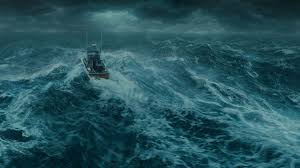
I recently listened to a “Self-Care in the Age of COVID-19” talk, and the presenter mentioned something that bothers her about today’s pandemic dialogue. “People keep saying we’re all in the same boat,” she stated, “but that’s not the right metaphor. It’s more accurate to say we’re all in the same storm. We’re in very different boats.” Her words rang true for me, as I’m sure they did for all the mental health workers tuned in to the training. Over the past several weeks, I’ve counseled folks captaining a vast array of boats – from luxurious yachts to driftwood pieces lashed together with twine – all trying to stay afloat through a prolonged, deadly storm.
There’s a lot of advice being batted around on how best to get through this time. “Take the opportunity to deep clean your house and learn a new language!” is often countered with: “Don’t stress about productivity. If you get through the day, you’re doing just fine.” “Go outside and take long walks!” is met with: “If you go outside, someone is definitely going to sneeze straight into your mouth.”
Since the dawn of the pandemic, I’ve landed on just one piece of advice, but I believe it’s a solid one, and there is no true counterargument. It’s simply this:
Breathe in through your nose…
…and out through your mouth.
Breathe in through your nose…
…and out through your mouth.
When negative, intrusive thoughts try to capture your attention, make note of them and put them aside.
Breathe in through your nose…
…and out through your mouth.
In through your nose…
…and out through your mouth.
If you haven’t breathed properly in a long time, by now you probably feel pretty high. But keep going. That’s just oxygen doing its thing.
Breathe in through your nose…
…and out through your mouth.
In through your nose…
…and out through your mouth.
That’s it. Keep breathing. It won’t change our current circumstances, but it will keep you calmer, more rational, and better able to face what comes. In a time full of fears and unknowns, sometimes the simplest actions are the best option we have.





 Powered by Dragons