My daily walking route runs through a nearby neighborhood of luxurious, historic homes, lush gardens, and gorgeous, giant trees. About six months ago, eye-catching flyers popped up on every pole in the neighborhood.
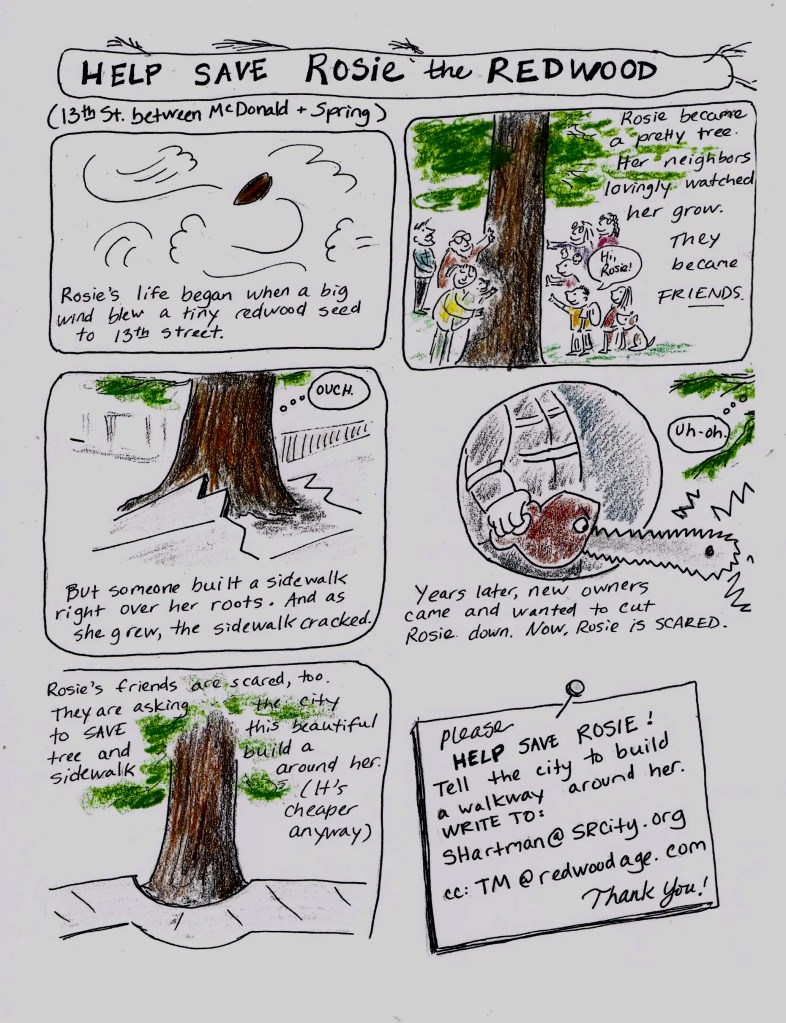
I stopped to read one of the flyers and had a few thoughts:
- What an adorable design. Very clever.
- Wow, this must be really embarrassing for the homeowners. (I later found out that they’re out-of-town landlords, so that concern fell by the wayside.)
- This seems like a no-brainer. Surely the City will want to save the tree and have a sidewalk built around it. Duh.
I decided to send an email to SHartman (say that out loud if you want a laugh), as suggested by the flyer. I explained that I live near Rosie, walk by her every day, and believe that humans should be respectful stewards of the land and do whatever we can to preserve giant, ancient trees. The Shartman didn’t respond, but Tom, the person I’d cc’ed who was heading up the Save Rosie campaign, got back to me right away, expressing gratitude and offering more information about the situation.
Over the next several weeks, Tom sent updates to the newly-formed Friends of Rosie crew, which included hundreds of community members who’d contacted the City and signed petitions, asking for the heritage redwood to be saved. In mid-June, I finally got a response from the City. Even though it was a direct reply to the email I’d sent months before, it mentioned nothing about the contents of my message. Instead, it simply stated that the City had approved a permit to remove the tree. The end.
So…that was demoralizing. I’d shared my concerns with the City, and their response was to ignore me for months, then essentially reply: Whatever, screw that tree and feel free to shove your concerns right up your butt.
At that point, Tom launched a formal appeal process. He started a crowd sourcing campaign, brought in a whole cadre of professionals (lawyers, engineers, arborists, fire safety specialists, an expert on urban planning and sustainable development…), and ended up submitting a comprehensive 50-page appeal. Weeks passed. Another round of flyers went up, these giving details about the upcoming Planning Commission review meeting, set for October 8.
So, we went to City Hall.
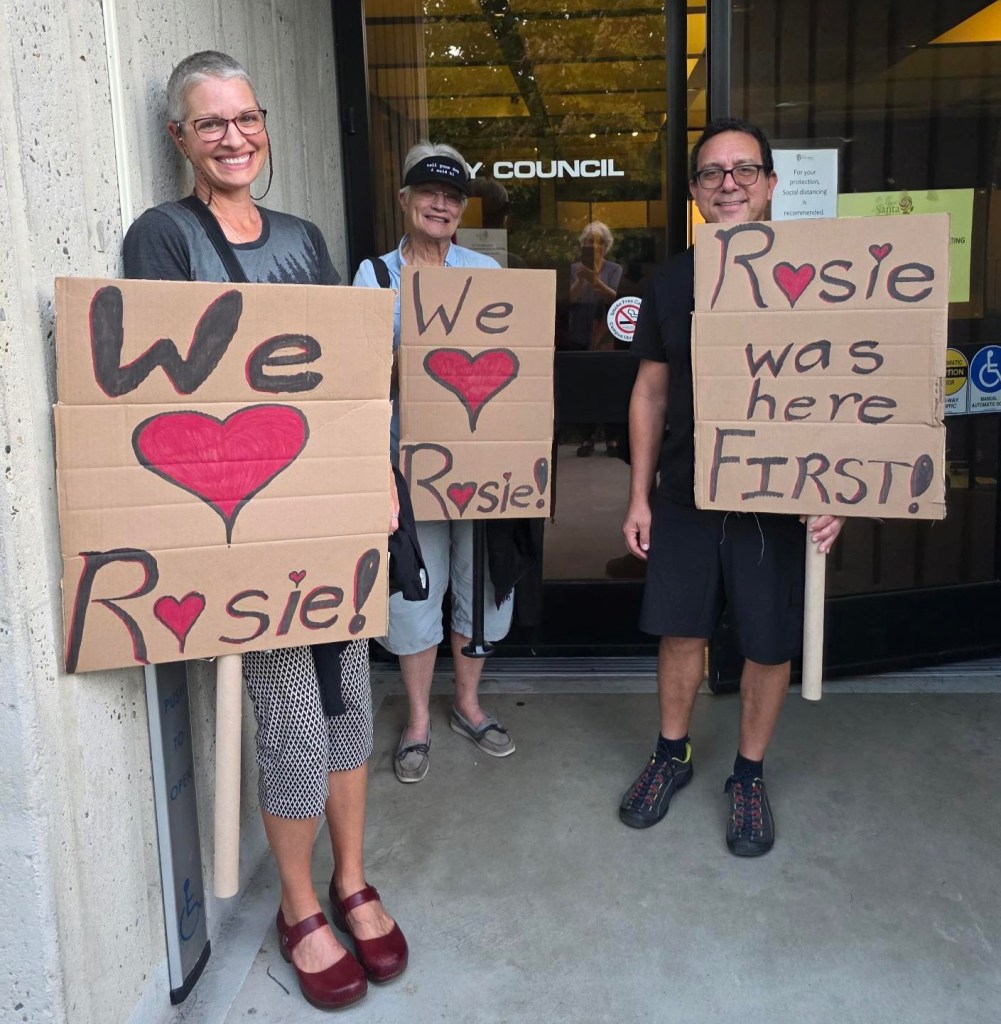
The beginning of the meeting was discouraging, with all 5 members of the Commission stating that they’d reviewed the appeal and intended to deny it. But then came the speeches. Over 30 people lined up along the back wall, almost all of whom spoke on Rosie’s behalf. Mostly, they were folks who lived in the neighborhood, many for generations, and felt personally connected to Rosie. Attorneys spoke about the City’s tree ordinance, which is supposed to protect heritage trees, and community members spoke passionately and knowledgeably about the physical, mental, spiritual, and environmental benefits of giant, old trees like Rosie, and the apparent simple fix of building a sidewalk bulb-out around her. Four people in the audience were wearing Lorax eyebrows and mustaches, and one of the Loraxes stated that the Commission had two choices: one that is reversible (preserving Rosie for now and seeing if the sidewalk strategy will work) and one that is not (cutting down a 100+-year-old redwood).
Aside from the homeowners themselves, only three people advocated for Rosie to be cut down. The arguments in favor of her demise were essentially these:
- There are plenty of other trees in the neighborhood.
- Redwoods should stay in places like Santa Cruz where they belong.
- Wildfires happen, and as we all know, trees are to blame.
- One time, a piece of a heritage tree fell on this one lady and she almost died. Therefore, heritage trees are bad and should be cut down. (Seriously, this person actually felt the need to tell this story into a microphone to a crowd of people. In case you weren’t aware, folks: The trees are out to get us.)
We left the meeting after two hours; it wasn’t over, but we were weary and needed food. I felt encouraged by the number of people who’d come out and spoken, but I wasn’t optimistic. All of the information shared in the meeting had been included in the appeal. We were really depending on the Commissioners caring about people’s personal narratives and emotions, and given the dead-eyed stares most had offered throughout the proceedings, I couldn’t see that happening. After all, this was a matter of personal property vs. a tree, and as an American, I could imagine where the chips would fall, even out here in California’s primarily liberal and eco-conscious North Bay.
I have a dear friend who has a running theory about humans. She calls it big granola vs. little granola. Essentially, the “big granola” are people with money and power, the “little granola” are folks who have neither of those things, and when it comes to big vs. little granola battles, regardless of how much justice, morality, education, experience, facts, etc. are on the little granola’s side, the outcome will most often end up just like in a box of granola: with the big granola on top and the little granola at the bottom.
It’s a bummer of a theory. Sadly, it’s been proven enough times in my experience to make me accept it as an unfortunate truth, and I was pretty sure that Rosie’s fate would be decided by the big granola, much to the little granola’s chagrin.
But here’s the thing:
WE WON.
The City Council reversed their decision, voting 3-2 in favor of the appeal.
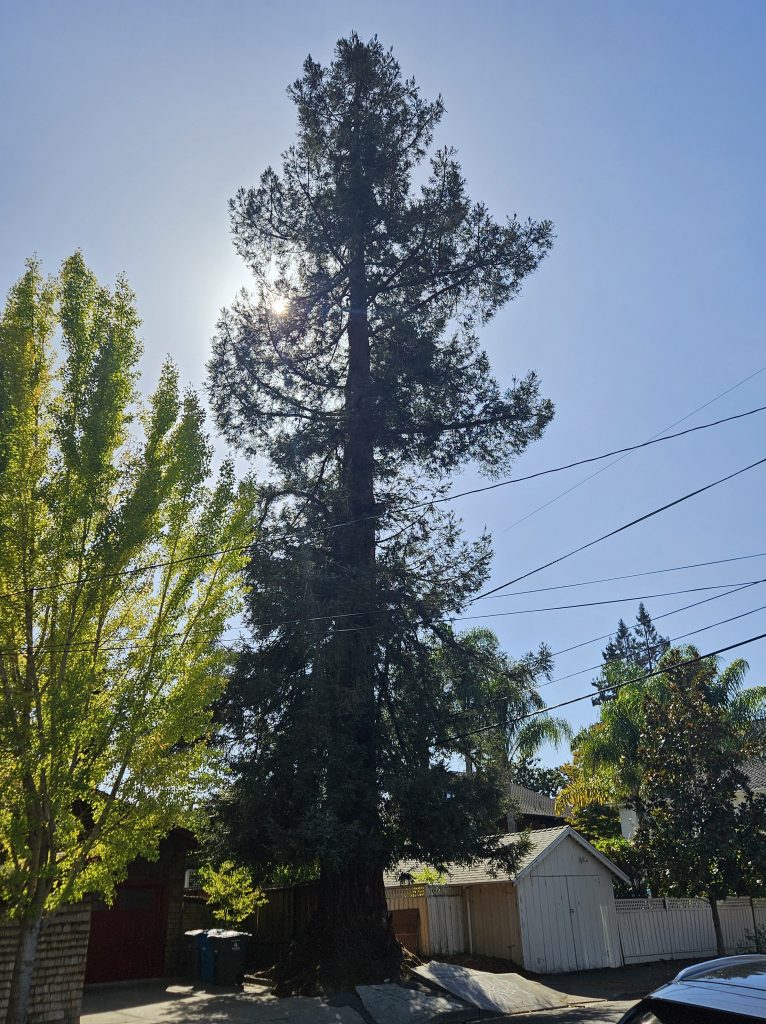
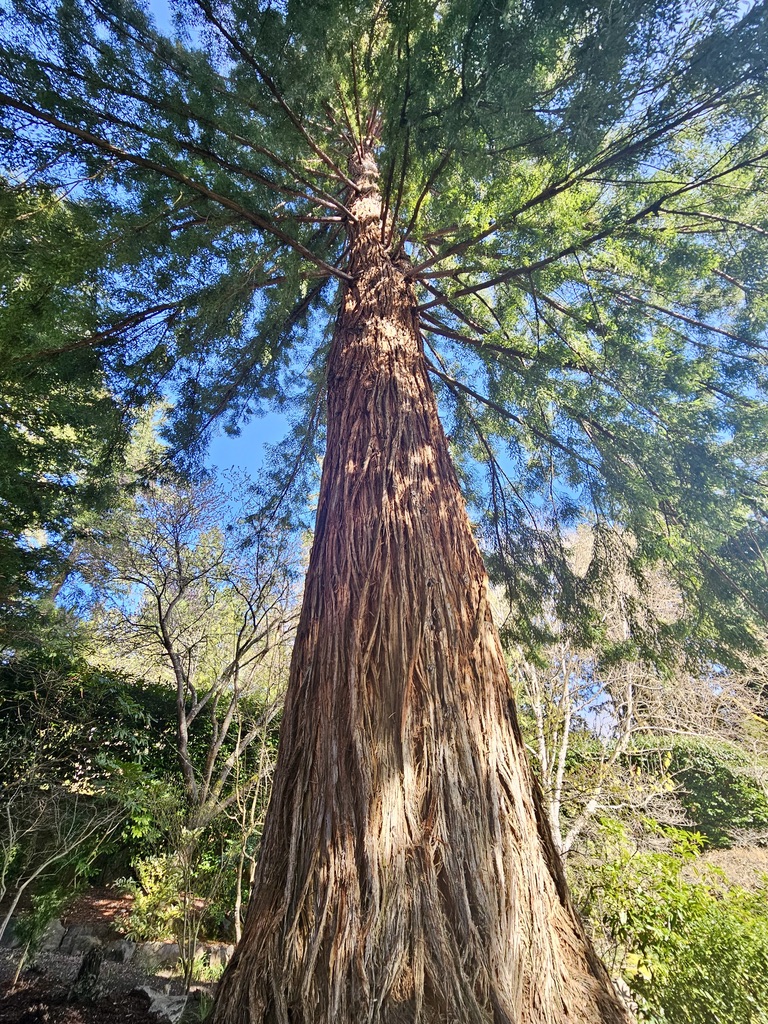
Yesterday, as I took this photo of Rosie in all her majesty, I felt a flush of relief for the blessed, albeit rare, little granola victory.
Thank you to the three Commissioners who made the choice to preserve an invaluable, natural resource.
And thank you, Rosie, for all you do for the health and wellbeing of those lucky enough to share your space and benefit from the benevolence of trees. We really do love you. ❤️