Dragons & Shrooms

IMG_0513

Over the years, many quotable people have made statements along these lines:  if you strive for something, it will remain hidden from you. When you’re ready, it will reveal itself. And while this lesson may prove true time and time again, it’s a hard one to learn.

Wrapped up in the “striving won’t serve you” idea is a healthy nod to the virtue of patience, and patience can be a doozy. A chronically restless friend once asked me, “What good is patience? If you have to be patient, it just means you’re waiting. Waiting sucks.” I told her, somewhat tongue-in-cheek, “Patience is its own reward,” to which she replied, “Ew. I hate that. Did you just make that up?”

IMG_0521

When the story of Aret was being developed, lots of questions needed answering, from big ones like Who are the main characters? to little ones like How do you say blue in Aretian? During this time, I was living alone, and the only creatures I had to bounce ideas off of were Libby the Dog and Sid the Cat. Their reactions were predictable. Libby thought everything I said was amazing, and Sid thought I should be quiet and let him sleep.

After one particularly frustrating morning of pacing back and forth in my little cottage, striving for answers and finding nothing, I went outside to escape the computer and found this adorable little mushroom cluster on the front lawn.

1

I went back inside, grabbed my camera, and commenced a mushroom family photo shoot. (Mushrooms may not offer much in terms of an emotional range, but they are quite good at staying still.) At some point during the process, the answers I’d been searching for all morning popped into my head. Poof! And my brain, which loves to draw lines between obvious points of connection, told me this:  When searching for answers about dragons, look to the ‘shrooms.

So I did. I’m good at listening to my brain.

IMG_0480

For the remainder of my time on Orcas, I spent each morning working on the book until a mountain of unanswered questions pushed me out the door and into the woods, where I searched for mushrooms, took pictures of them, and told them how lovely they were. (They really are.) By the time I returned home, I had answers to all of the morning’s questions, and I spent the rest of each evening writing. It was the perfect formula for ongoing creativity.

The meditative state resulting from my daily mushroom hunts opened the door to all kinds of answers, and not just about dragons. One night, I wrote in my journal:  Today, while I scanned the forest for mushrooms, I figured out some things for my book and also about my life. Mushrooms are magical like that. They offer a lot without asking for a thing in return.

IMG_0512

As my three months of extreme solitude wound to an end, I started to panic a bit, although I knew it was time to reintegrate into society and speak with humans again. During my last week on Orcas, I wrote:  When you get teary at an 80s movie’s super cheeseball Christmas-themed ending, you have officially been alone for too long.

But I was worried. Without the cozy set-up I had on Orcas, I feared that I wouldn’t be able to find my answers anymore, as if my imagination would cease to function the moment I hit the mainland. The idea was horrifying, especially since I had two more books to write. And those are just the books about Aret.

But you know what?

mainland

As it turns out, mushrooms are pretty much everywhere. And it’s a good thing, too. My dragons and I have come to depend on them.
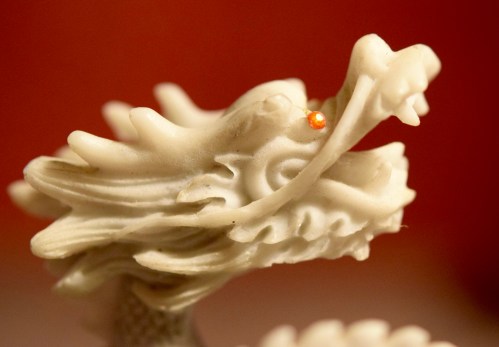
The Valtamani

DSC_0002

One of the joys of writing is having the opportunity to create kickass female characters. There are far too many undeveloped, unbelievable, uninteresting token females dropped into stories (maybe someday writers will understand that having more numerous and varied female characters makes stories better), so each time a fabulous female is added to the ranks, I like to think it balances things out a bit, male-dominance-wise.

My favorite thing about Aret’s protagonist is that she occupies two bodies: Diana Scarlett – a 21-year-old pacifist, vegetarian, and apprentice with the United Brotherhood of Carpenters; and the Valtamani Skara, a thousand-year-old egalitarian, diplomat, and leader of a race of dragons. Therefore, our protagonist is, as it were, a twofer – two totally tremendous characters wrapped up in one.

Needless to say, when one exists as a dragon on one world, then finds oneself as human on another, complications arise. For example, there are misconceptions and prejudices to face. When the Valtamani conducts her initial research on Earth and reads the humans’ stories about dragons, her reaction is this:

Gold-hoarding monsters, indeed. Dragons do not even have a system of currency.

To further demonstrate the complexity of occupying different bodies on different worlds, here’s a peek at Diana’s diary:

I had dinner at my parents’ house this evening and brought homemade cupcakes, which they pretended to enjoy even though I used way too much salt. Let’s hear it for unconditional love! They asked where I’ve been, since I missed brunch with Nana and didn’t even call, so I let them know I’ve been flying around on another world eating deer heads, guarding eggs, running a governing body, and trying to conjure up a strategy to end a twenty-year war between humans and dragons.

The Valtamani/Diana is imperfect, of course. That’s part of having three dimensions. She can be selfish, impulsive, and cold, but shining a light on those attributes was every bit as enjoyable as showcasing her wit, strength, and snarkiness. Yes, snarkiness. For despite her sophisticated nature, our protagonist has a tendency to be quite snarky in both her human and dragon forms. After a thousand years of life, I believe she deserves a free pass to be an unapologetic wiseass. Hell, I’ve only been around 40 years and have granted myself that license already.

10457858_764163577027942_1936091328120008625_n

Trusting the Tract

tracks

In a recent conversation with my sister, she spoke of a little voice that guides her in making important decisions. Despite the knee-jerk diagnostic tendencies that accompany a background in psychology, I do realize she isn’t suffering from auditory delusions. She simply allows herself to be guided by intuition.

As I listened to her, I wondered why I don’t have a guiding voice. Sure, there’s a lot of chatter in my head, but rarely is this chatter insightful. It’s more like the incessant honking of a gaggle of geese: pervasive, loud, and obnoxious.

Then I remembered that I do have an intuitive sense, although it doesn’t dwell in my head. It lives in my digestive tract. And it’s not a voice; it’s an irritant. My intuition works like this: if I’m making good choices, it remains dormant, but when I fall off my path, it roars to life. And not in a good way.

eep

Throughout the years of writing and revising Aret, my end plan was to self-publish. I felt really good about that option and spent many hours considering how I’d go about it. However, a few months ago, after completing what I like to call my “final revision” (ha ha), I suddenly changed course and decided I should try the traditional publishing route. Despite my stomach’s angry response, I started down the querying path. As I clicked from one literary agency’s website to the next, my intestines contracted with alarm, but I chalked it up to feeling out of my element.

Yesterday, all of that changed. After spending the morning tweaking a corny query letter while ignoring my gut’s furious roiling, I received some serious, family-related news. Since extreme, unexpected personal matters tend to press the pause button on the rest of my life, receiving this news made me freeze long enough to notice that my stomach was on fire. And in that moment of painful reflection, I thought, What am I doing? Life is short. I’m wasting time!

Voila! Just like that, my intuition stretched, yawned, and went back to sleep, apparently trusting that I’d found my way back to the path. Which I have.

11040879_10206186018065997_6232299043142809285_n
              I’m pretty sure I’m supposed to go up.

As my tummy settled, I remembered all the exciting self-publishing ideas I’d had before stumbling off the rails, and I got all squiggly with excitement. One of the things I’d planned to do was contact a dear friend (also a professional actor) to ask if she might be interested in doing the audiobook for Aret. For free, mind you, because I don’t know if the book will ever make money.

Granted, this is a strange request to make of a friend. Um, want to do a lot of work for no money? Because I would love to hear you read this story. Plus, if I’m going to take anyone on this crazy ride, I’d like it to be you. After all, we have a history of doing that sort of thing.

coaster

And she said YES – a gleeful yes, full of smiley faces and exclamation points, which makes me feel like this:
joy
I’m back on the path. All is right with the world (the world of Aret, anyway). And all my digestive tract has to say is, “Zzzzzzz.” I’ll take that as a sign that I’m headed the right way.

The Sun Always Shines on Aret

sun

Building a world is fun and complicated in equal parts. While it’s fun to create a host of new rules to govern one’s land of make believe, the complexity manifests in holding oneself accountable to those rules, which, of course, involves remembering them.

In the early stages of this story’s development, I decided that time runs ten times faster on Earth than it does on Aret. What led to that preposterous, labyrinthine choice? I have no idea. Really, I cannot remember, but considering all the trouble it’s caused, I have to believe it was a decision based on sound logic.

Once the rule was established, Aret’s plot and characters intertwined all around it, creating a sticky mess of narrative knots unthinkable to untangle. So I had to embrace the 10:1 time factor, despite its propensity to cause twitchy eyelids and bouts of explosive swearing.

Throughout the writing of book 1, I thought I took great care in following the terrible time rule, but during one of my nine thousand revisions, I discovered something dreadful. Over the course of the story, about three weeks passed on Earth, which meant that only two days had passed on Aret. However, in every scene that took place on Aret, the sun shone brightly in the sky.

rainbow

Crap.

That was not a happy realization, but I tried not to panic. I leashed up my dogs, took them into the woods, and commenced an intense, semi-combative internal dialogue.

Inner Me #1:  What am I supposed to do about this? Half the scenes on Aret should take place at night!

Inner Me #2:  Hmm. Maybe there’s no night on Aret. It’s just day all the time!

IM #1:  Oh, Kelly. That is so lazy.

IM #2:  True. Maybe I need to get rid of that pesky 10:1 time rule.

IM #1:  Okay. Except that means recreating the entire story.  Are you up for that?

IM #2:  Um, no. Maybe I don’t want to be a writer. Maybe I should be a firefighter instead.

IM #1:  Good grief. Quit whining and put some scenes in the dark already!

sunset

So I did. I combed through the narrative, figured out the exact timing as characters traveled between worlds (a painful, migraine-inducing experience), and, at long last, incorporated sunsets and starry nights into Aretian scenes.

Bringing darkness to Aret led to another new rule – my dragons have perfect night vision, yet they burn torches in their Council Hall at night, anyway. Why? Well, they’re sophisticated creatures. I imagine they enjoy the ambience.

As I reflect on the process of creating this story, I have one piece of advice to offer other budding fantasy writers. Consider NOT messing with time. Time doesn’t like being manipulated. It just might retaliate.