Four Years

On the morning of Monday, September 14, 2020, I received a message from my supervisor, letting me know that my colleague’s mother had died of COVID over the weekend. My heart ached. When I’d talked with my colleague the week before, she’d told me her elderly mother had developed a fever and started to cough, and I knew this was the eventuality she’d feared most.

Needing to clear my head, I decided to take a quick walk before the workday began. About two blocks from home, Mom called. “I can’t believe I have to tell you this,” she said in a tone I’d never heard before. “Daddy died.”

I turned around, already blinded by tears, and stumbled back to the house. My husband’s eyes grew wide when he saw me. I choked out what had happened, and he yelled, “No!” We held each other and sobbed. When I was able to catch a breath, I told Mom I’d pack a bag and head to her house right away. Before leaving, I sent a quick text to my supervisor: My dad died last night. Heading to my mom’s. I’ll be in touch when I can. In the back of my mind, I wondered if my supervisor would even believe me, given that morning’s news about my colleague. What are the chances that both of his employees would lose parents on the same weekend? (As my dad would’ve said: “Apparently 100%.”)

A few minutes from Mom’s house, the skies opened up, and I drove the final mile of steep, twisting mountain roads in a blinding rainstorm. My knuckles were white and jaw clenched tight by the time I pulled into Mom’s driveway. She stood in the garage, her face pinched with worry. Apparently, we were both in the same mindset about the likely outcome of my drive through this storm. Given our family’s recent circumstances – six months into my sister’s cancer treatment, tag-teaming with my parents to care for 8- and 5-year-old boys who couldn’t go to school or see friends, and preparing for my sister’s upcoming hospitalization for a stem cell transplant, scheduled the following week – it would’ve been entirely apt for me to be swept off a cliff by a flash flood on the morning of my father’s death.

But that didn’t happen. We went on. One foot in front of the other. Gallons of tears shed. Countless deep breaths. And somehow, four years passed.

Since I hang the necklace I wear every day on a photo of Dad and me, I look at his smiling face at least twice a day. Sometimes I look at him and think, I’m sorry you missed this. You would’ve loved it. Other times, I think, I’m glad you’re not here for this. Because I know some events would’ve made him furious, or despondent, or just left him feeling helpless.

And every single time the necklace goes on or comes off the frame, I think, I miss you. That sentiment never wavers.
Endings

In my final week on Orcas Island, where I’d lived alone for three months to focus on writing, every ending made me cry. The end of a book. A hiking trail. A meal. A football game. With each one, I choked back sobs and wiped away tears, wondering how I’d become so fragile. After a few days, I figured out the pattern. My life on the island was about to be over, filling me with so much grief that all other endings did the same.

About a month ago, I started to experience similar, spontaneous bouts of distress. I’d be in a meeting, on a walk, or spending time with friends when my heart would start to race and a lump would rise in my throat. Having been through this before, it didn’t take long to pinpoint the cause. I’m nearing the end of a book I’ve been working on since 2012, and no matter how exciting it is to approach the finish line, I always get a bit sad when I finish a piece of writing. For the past eleven years, I’ve been hanging out with this cast of characters on a world I created, and all of that is coming to an end.

But there’s another layer to the grief that accompanies the completion of this story. My dad, who passed in 2020, was one of its first readers, critics, and fans. When I wrote the Acknowledgements section of the first part of Aret back in 2016, I began with this:

Before reading Aret, my father (who reads about five books a week) had never read a single book in the fantasy genre, as he had zero desire to do so. But because he is meticulous, highly critical, and frank (which also happens to be his name), I asked him to be one of my first readers, then burdened him with each major revision (I believe there were four or five, although he estimates the number at closer to a hundred). With each reading, he’d take several pages of notes, and we’d spend hours together so I could “defend my dissertation” while he inundated me with questions and critiques. Although I know he’d prefer it if I wrote about spies, the Old West, fly fishing, or the Napoleonic Wars, he worked tirelessly on Aret. Dad – thank you.

I wrote those words with the confidence of someone who had no idea what life would bring. It never occurred to me that Dad would die before I finished the story. I thought we’d be on the journey together – him brutally criticizing every word while also celebrating the characters and plot points that brought him joy. As I reach the final page, there is a huge, unmistakeable void in my writing process. Dad should be here to see how it ends, and he isn’t.

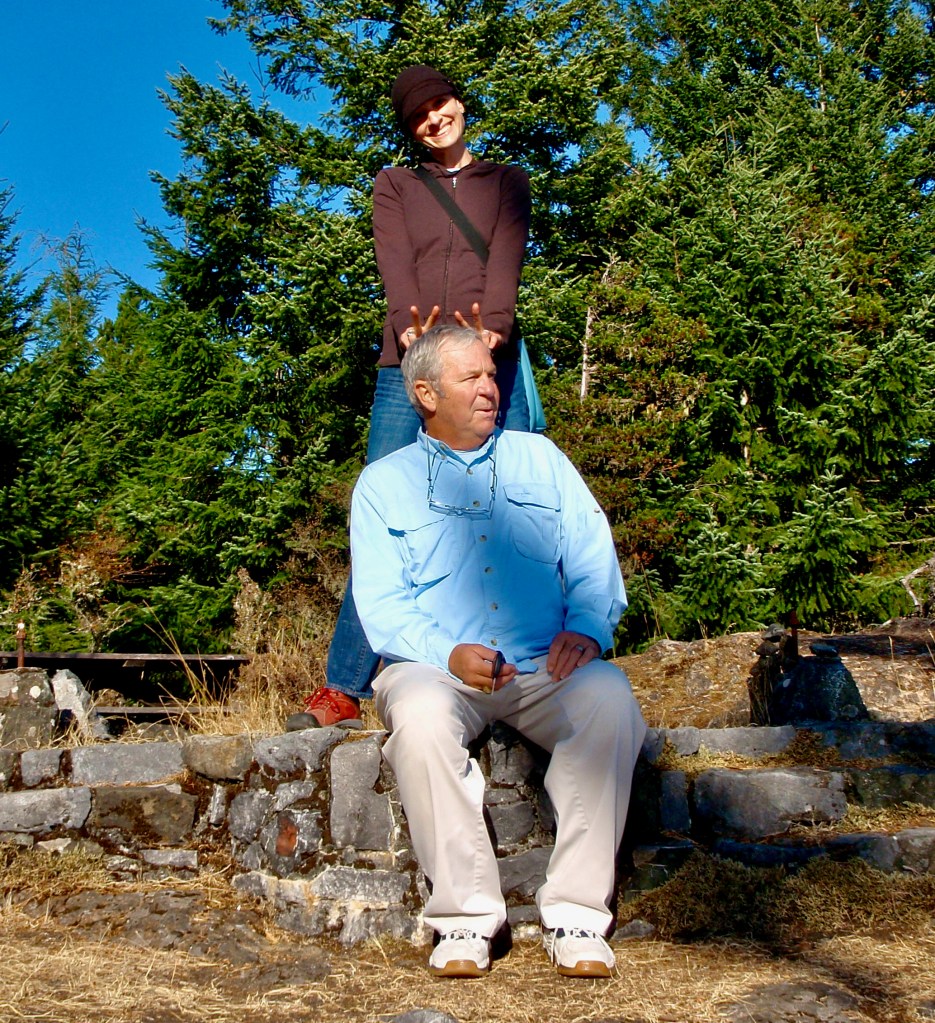
A few days ago, I looked through photos of my parents’ visit to Orcas, back when the world of Aret was just coming to life. I found this shot of Dad and me at the Little Summit in Moran State Park:

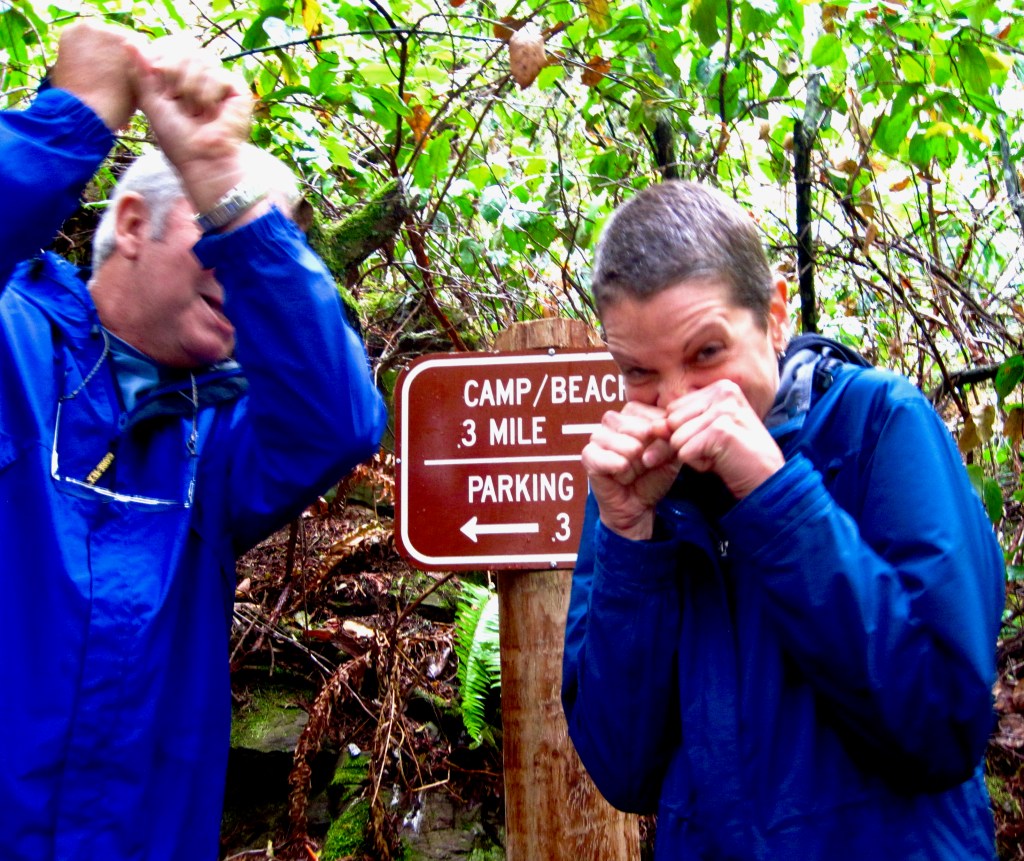
And this one of Dad beating me with an imaginary baseball bat after I accidentally took him on an hourlong hike that was supposed to be half a mile:

(Anyone who’s hiked with me knows this is par for the course, but Dad was unamused.)

Photos and memories like these help to balance the grief of his loss with gratitude for the silly and loving relationship we had. He helped me develop a thick skin, along with a greater ability to accept criticism, and that made me a better writer.

Thank you, Dad, for everything. What I tell myself is that you would’ve hated the way I ended the story, and you would’ve fought me on it, and it would’ve been a whole thing. So maybe it’s better this way. 😉

But really, I just miss you, and I wish you were around to help me navigate and celebrate this ending.

We Miss You, Mister Buttface

Some dates have weight, and for me, September 14th is a heavy one. On 9/14/2012, I arrived on Orcas Island, where I lived alone in a magical wonderland and wrote Aret. And on 9/14/2020, Dad died in his sleep, setting my world off its axis with his sudden, permanent absence.

The juxtaposition of those two dates reminds me of Francis Weller’s guidance to hold grief in one hand and gratitude in the other, which is also how I try to balance memories of Dad. For each that brings a lump to my throat and tears to my eyes, I try calling to mind one that makes me laugh.

Like this:

My sister and her two boys were visiting my parents for the weekend. While the boys were goofing around during bath time, out of the clear blue sky, 4-year-old Henry called my dad “Mister Buttface.” Upon seeing the resultant, terrifying look on Dad’s face, Henry cried, “I’m sorry! I’m sorry I’m sorry I’m sorry!” And that should’ve been the end of it, right? But no. On his way out of the bathroom a few minutes later, Henry called, “Oh, Graaaaaampy!” When Dad turned around, naked Henry made brazen eye contact, smacked his little butt three times, and dashed out of the room.

I arrived in the aftermath of this incident, and when I asked Dad how he felt about the unexpected, unprovoked attack from his normally sweet grandson, he gazed into the distance and replied, “I’m just trying to imagine what my grandfather would’ve done if I’d ever called him Mister Buttface.”

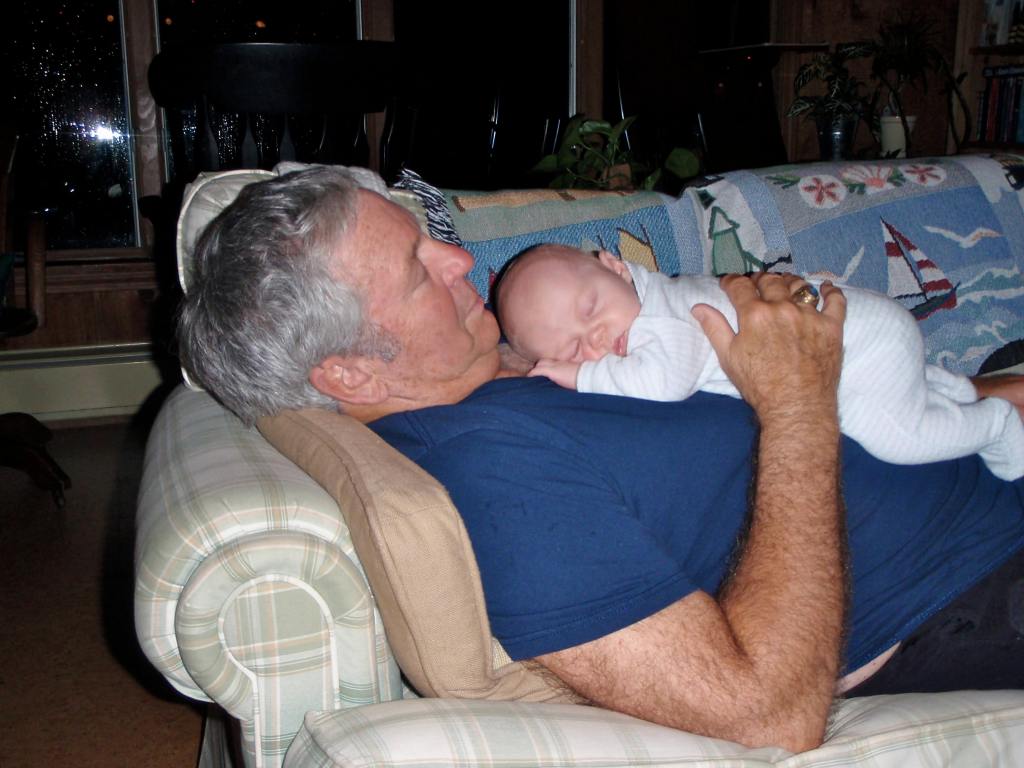
Dad had a framed photo of the two of us on his dresser, and now it’s on mine. Soon after he died, I had a necklace made from one of the pennies he’d kept in his penny loafers, and when it’s not in use, it hangs on a corner of the picture frame. Each morning, I lift the necklace from the frame and say, “Mornin’, Dad.” And at the end of the day, I return it and say, “Goodnight, Dad.” Sometimes I share news that would’ve been of interest to him, like, “We’re meeting up with Mom to celebrate her birthday,” or, “The boys start school today.”

This evening, to balance out the weight of September 14th, I think I’ll change things up a bit. As I place the necklace back on the frame, I’ll look down at Dad’s smile and say, “Goodnight, Mister Buttface.”

Nadie Sale Vivo, Part II

I have no idea what triggered this conversation 10ish years ago, but the memory will crack me up forever:

[Setting ~ Dad, JR and I watch TV in my parents’ family room]

Dad: “Kelly will be a cougar someday.”

JR & me in unison: “What?!”

Dad: “What?” (pause) “Why, what’s a cougar?”

Me: “A cougar is an older woman who sexually preys on young men.”

Dad: “Oh! Shit. Never mind. I thought it was just a good-looking older woman. Sorry, JR.”

Yup, that’s right. “Sorry, JR.” 🙄 😂

I love this memory of Dad. Simple and lighthearted. Perfect. As the months pass, I find myself treasuring these types of memories the most.

Earlier this week, a group of family and friends traveled to the Marquesas Keys to honor Dad’s life and release his ashes into the waves, per his oft-repeated request. In the photo above, I hold his ashes in one hand and a journal in which I’d written a brief tribute to him in the other. By some miracle, I managed to say the words out loud with a minimum of tearful pauses.

I realize now that I left something out: “Thank you for changing your mind about my future cougar status after you found out what a cougar is.”

It’s interesting to see photos of myself at Dad’s memorial, my arm bearing the words Nadie sale vivo. While people continue to misinterpret the tattoo’s meaning (no, it doesn’t mean I want to kill everyone), for me, it continues to be a helpful reminder to honor each moment of life – each breath, each heartbeat, each moment. It prompts me to hold my loved ones close and leave no kind word unspoken. No one lives forever, not even the dearest dads, and we never know which hug or “I love you” will be the last.

Dichotomous Heart

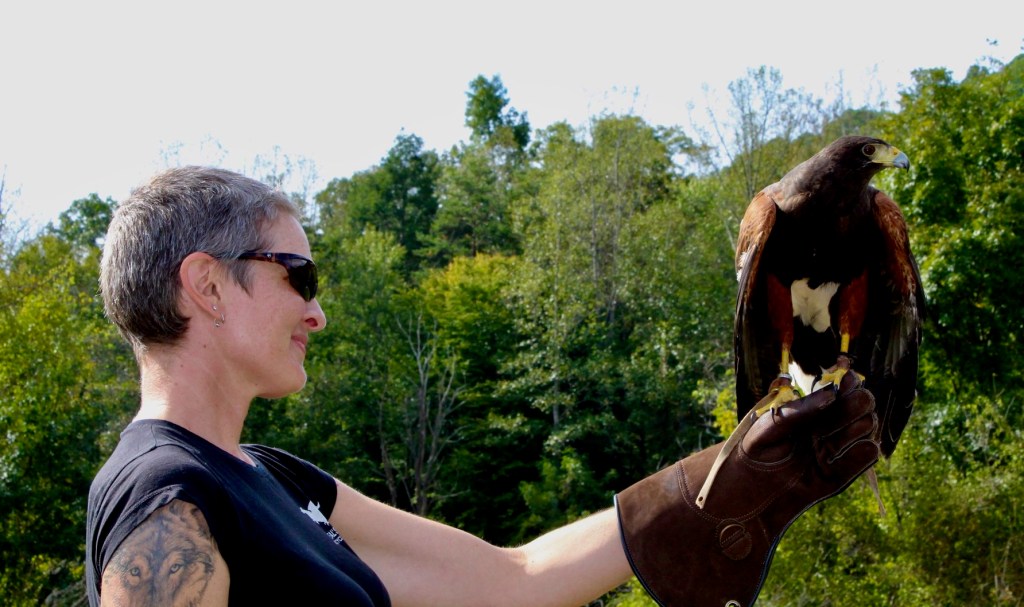
When Dad saw the photos from my 2018 falconry adventure, he asked if I’d ever heard about the little owl he found, back in his sailing days. I hadn’t, and given my newfound interest in birds of prey, I eagerly listened while he shared the tale.

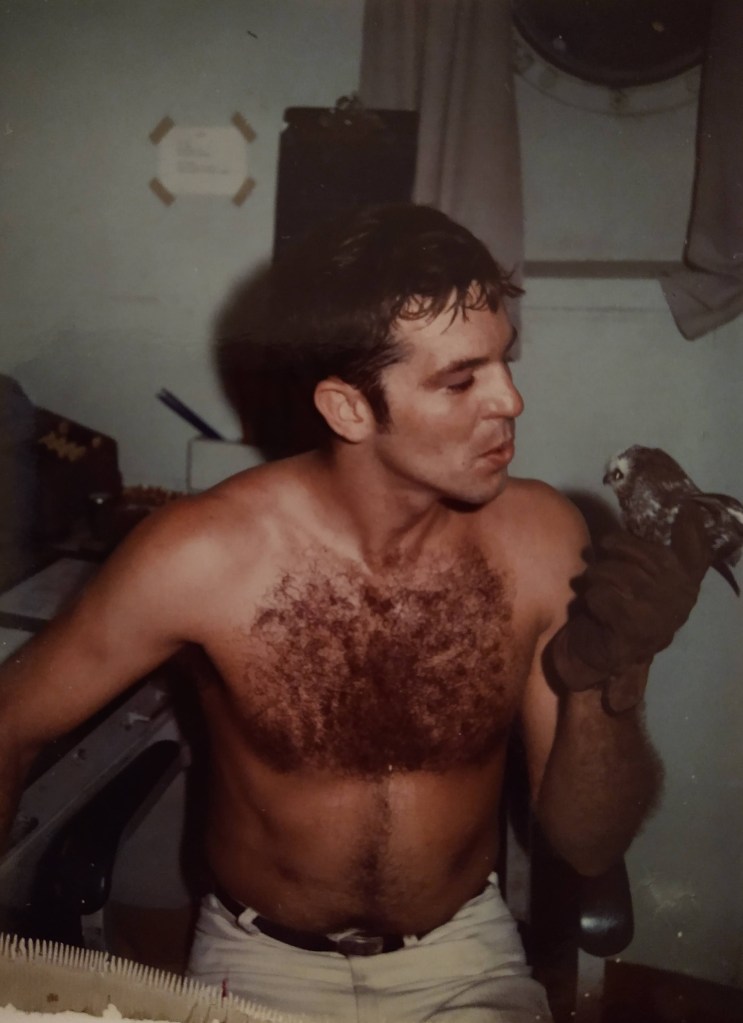
Dad was Chief Mate on the container ship SS Detroit as it sailed from New Jersey to Puerto Rico. One morning, he discovered a tiny owl with its talons entangled in the ship’s rigging. The poor thing had been blown out to sea in a big storm the night before and was well and truly stuck. After freeing the terrified owl, Dad prevailed upon the ship’s cook to provide him with hamburger to feed his new charge. Trust-building was a challenge, and Dad described his huge sense of relief the first time the owl accepted food from his hand. When the ship docked in San Juan, he transferred the little survivor to the Audubon Society.

On November 1st, my mom, husband and I set up an altar to honor our departed loved ones. Mom thought it would be a good time to sift through piles of family photos she’d been given over the years, and in the process, we discovered this:

What a gift to find an image of Dad with his tiny rescued owl. Seeing him here reminds me of the countless times he offered care and comfort with sincerity and love, and without question.

My dad was a man of two hearts. The physical heart, with its valves, ventricles, aorta and atriums, was weak and fragile. It failed and took him from the world. But the heart he shared with others was fierce and mighty, radiating kindness, protection and generosity. That’s the heart he gave to those who crossed his path. That’s the heart that remains with us.

The Grief Tornado

“They’re called the Stages of Grief, but don’t expect them to march along in a logical, predictable order. Their arrival may seem more like a swirling tornado.”

Mirroring this state of emotional chaos, the presenter whirled his arms through the air while I doodled row upon row of tiny circles in my notebook. Though his style was dynamic, it’s hard for lecturers to capture my attention for long, especially when I’m seated in a frigid banquet room under anemic lighting with hundreds of other whispering, coughing, fidgeting attendees.

His arms continued to spiral while he pantomimed a wild ride through the stages of grief: a sudden crash into depression, swift slide over to bargaining, explosion of anger, dip of a toe in acceptance, then a graceless stumble back to denial. As he said, “Sometimes that’s all in an hour!” and the audience laughed, I wrote Stages of Grief = Emotional Tornado below a row of tiny circles.

The trainer’s whirling arms were brought to mind a few days after my father’s sudden death two weeks ago, when Mom described a dream she’d had the night before in which she and Dad watched a huge tornado bearing down on them. These days, I’m caught squarely in the center of my own grief tornado, and I don’t need anywhere near an hour to spiral erratically through the stages. In a span of five minutes, I’ll sob my head off, narrow my eyes at a photo of him and mutter, “Thanks for bailing on us,” sob again, convince myself that this is just part of the relentless nightmare that is 2020 and he’ll be back at any moment, sob some more, tell God that I will totally start believing in him/her/them if this situation can be undone (please and thank you, amen), sob sob sob, then decide that staying in bed forever is probably the best idea. Clearly, acceptance has not yet found its place in my tornado. The pain is still so raw that acceptance seems like a betrayal to his memory. I know (hope/trust) that this will change with time.

When I arrived at my parents’ house the morning after Dad’s death, I found his to-do list on the kitchen table, his pill case beside his bed, filled up for the week to come, his day-to-day toiletries in the bathroom, his clothes piled on the dryer, and a pair of his shoes by every door. His watch, placed on the table next to his usual spot on the couch, still tracked the seconds, minutes, and hours in which he no longer existed. Packages of fishing supplies he’d recently ordered arrived at the house alongside floral arrangements and sympathy cards.

Dad was yanked away so quickly that it’s hard to stop reeling from the shock. I hugged him and said goodbye just hours before he died. He was expected at my sister’s later that week to look after his grandsons for a few days. He and Mom had planned to take the Blue Ridge Parkway to visit my husband, sister, and me at our campsite that weekend. When we’d made the plan, he’d pulled out one of his trusty paper maps to plan the route and said, “It’s good to have something to look forward to.”

I’ve dreaded my father’s passing ever since his first major cardiac event in 1985, when I was ten years old. Despite the fervent protests of his loved ones, he was always cavalier about his death, replying to each, “Good night – see you in the morning!” with, “I certainly hope so,” and reminding us ad nauseam that he wouldn’t be around forever. But nothing could’ve prepared me for this abrupt loss. The finality. The permanent state of absence. As I told my mom the other day, “He just keeps being gone.” She said she’d been thinking the same thing – that he’d been away plenty of times before, but he’d always come back. And we took a step away from our separate tornados to hold each other and cry.

I know that my family, and everyone who loved Dad, will find a way to get through this. We’re huddling close and holding onto one another. In my journal, I’m writing a list of all the things he loved, and while it makes me break down now, someday it will make me smile. I’ve discovered two good grief strategies: the shower is a good place to cry, and the car is a good place to scream. And I’m not fighting the tornado. Like all forces of nature, even the most vicious, it will run its course, and in the wake of its destructive path, there will be opportunities for rebirth. While that future is unforeseeable today, I trust that it will come.

Dad Talks

Butterfly1.JPG

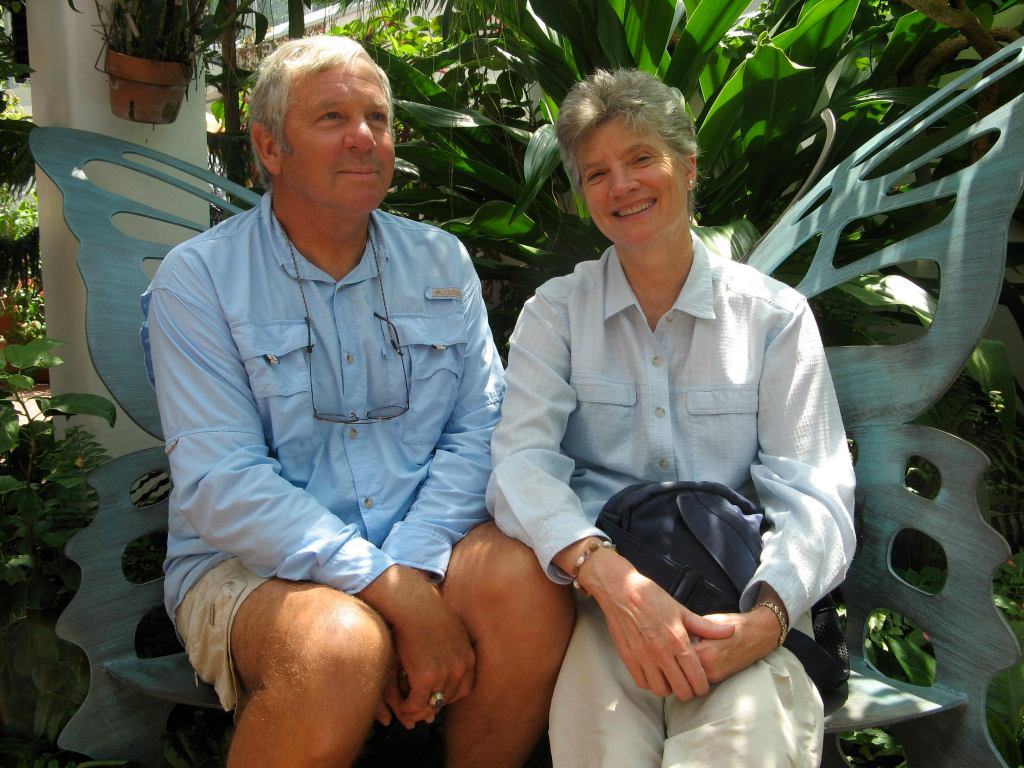
My parents celebrate their 50th anniversary today. When they got married in the summer of ’68, Dad was 25, and Mom was 3 days shy of her 20th birthday, which means this year brings other milestones as well: Dad’s 75th and Mom’s 70th. To honor their awesomeness, I’m going to write something about each of them. Dad was born first, so he gets Post of Honor #1.

Because I’ve been in the counseling field for almost 20 years, I tend to avoid things like talk radio, podcasts, and Ted Talks. The last thing I want to do outside of work is spend more time listening to people talking. But Dad’s talks are different. Like precious gems, they are both rare and valuable. The ones that stick out most in my memory are those that came during times of transition, usually right before a big move.

Dad Talk #1: On the night before I headed to college, Dad told me we needed to talk. He took me aside and said this: “At the place you’re going, there will be a lot of kids who are smarter than you and a lot who have more money than you. And I don’t want you to forget who you are.” His warning stuck with me, and each time my identity got derailed throughout the college years, his words helped me find the way back to myself.

Dad Talk #2: Six years later, when I made the decision to move from the East Coast to California, Dad sat me down for another talk. “All right, there’s something important I need you to know,” he began. Tears sprang to my eyes as I prepared for a heart-wrenching farewell speech, but what came next was this: “If you’re attacked by a mountain lion, you need to fight. You can’t play dead. It’s the same with black bears. Playing dead only works with grizzlies. Black bears and mountain lions will kill you, so you’ve got to fight.” I said, “Okay, Dad,” but what I thought was, If it comes down to hand-to-paw combat between me and a mountain lion, I will not win. I will be cat food. He did get a little more emotional after that. Once I’d agreed to fight off mountain lion attacks, he added, “I hope you don’t like it out there. But I know you’re going to love it.”

Dad Talk #3: Fast-forward fourteen years. When Dad caught wind of the fact that I was planning to move from Oregon to San Diego, I received a voicemail: “It’s your father. Call me.” Since his usual message was: “Kelly, call your mother,” I figured it was serious and called back right away. “Your sister tells me you’re thinking of moving back to California,” he said. Before I had a chance to respond, he continued, “Your nephew is moving to North Carolina, and he’ll need his aunt and uncle. It’s time for you to move back east. Your mother misses you.” The way I figure, if someone I love and respect gives me one stern directive every couple decades or so, I should probably follow it, so my husband and I packed up and moved across the country. That was five years ago. Now we have two little nephews, and it’s awesome to be a part of their lives.

Of course, Dad has taught me way more than what I gleaned from those three talks. He taught me to fish, shoot, play sports, face fears, be true to my word, appreciate the outdoors, keep an open mind, hold myself to a high standard, treat people with respect, and be an honest and genuine friend. He also taught me that vanity is stupid, which is an invaluable lesson. He once dreamt that he had a bald spot on the back of his head. Upon waking, he decided it was true, then retained the belief for an indeterminate period of time (weeks? months?) until he happened to mention his bald spot to Mom, who informed him that it didn’t exist. I just love the fact that he never checked.

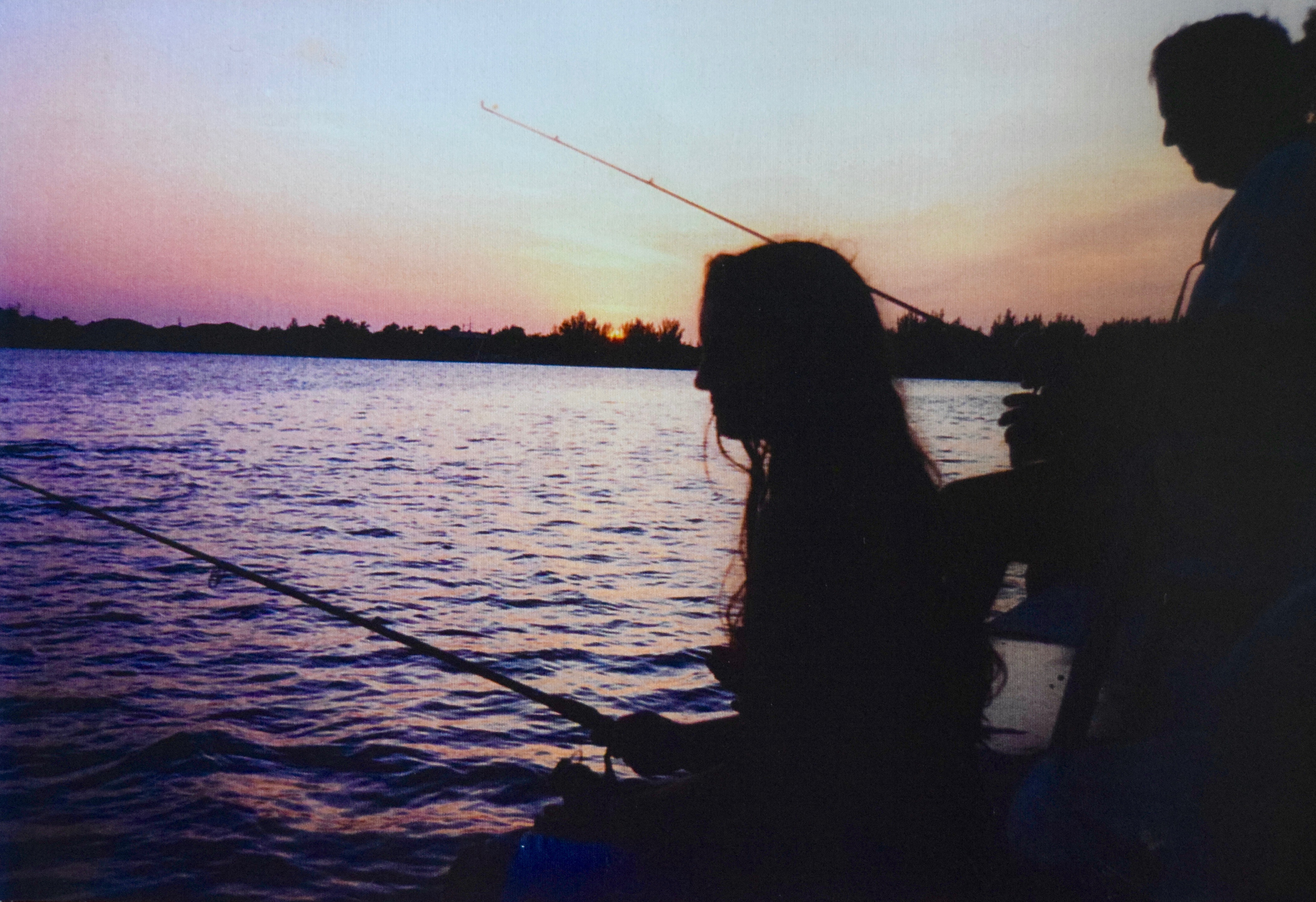
DSC_0021.jpgSpeaking of hair, that hairy beast is ’90s me, fishing off the seawall with Dad

Many years ago, back in my mountain-lion-battling California days, I gave a training to a group of child advocates. At the end of the session, one of the trainees stayed behind to ask me some follow-up questions. He let me know he was a single dad raising two teenagers, and we chatted for a while about kids, families, and child rearing practices. Before he left, he asked if I was raised by both of my parents, and I told him I was. “Were you close to your dad?” he asked. I said I was and still am. “It shows,” he said with a smile. That was one of the best compliments I’ve ever received.

Love you, Dad. Happy anniversary. ❤️